

The Reality of Real-Time Auctions
Tilt is a live-auction marketplace for limited-edition goods in the UK, France, Italy and Poland. Every day it runs thousands of fast-moving auctions, each watched by multiples of that number of bidders and spectators. In this high-stakes environment, even a small dip in engagement or pricing can mean the difference between selling out and leaving money on the table. Real-time insight isn't a luxury here. It's essential.
How Data Moves at Tilt
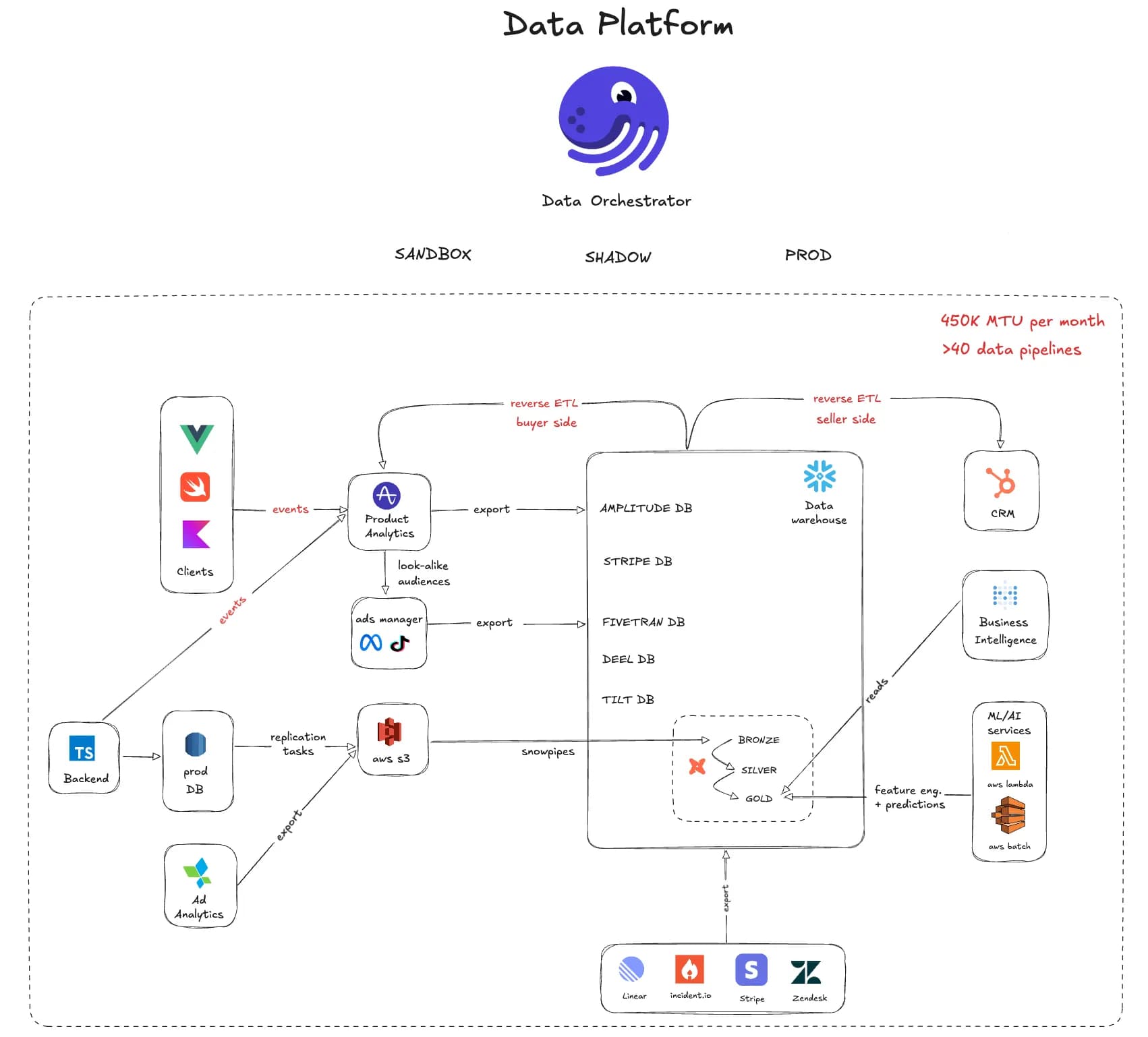
Tilt's modern stack is orchestrated with Dagster and built around Snowflake as the central warehouse:
- Event Collection: Client apps (web and mobile) and the backend emit events into Amplitude.
- Transaction/Auction Storage: The backend writes business-critical data into AWS RDS.
- Data Export: Amplitude, AWS RDS and marketing/ads tools export their raw event and transaction logs into AWS S3.
- Warehouse Ingestion: Raw data from S3 loads into Snowflake via Snowpipes.
- Transformation: Inside Snowflake, dbt transforms the raw tables into aggregated tables used for analytical queries (following the medallion architecture).
All of this supports roughly 450k monthly tracked users and over 40 active data pipelines, while still being maintained by a very lean data team.
Before Contextflo: Tickets, Backlogs, and Delayed Decisions
Ticket, then the data backlog, then a 3-5 day SLA, then maybe an answer
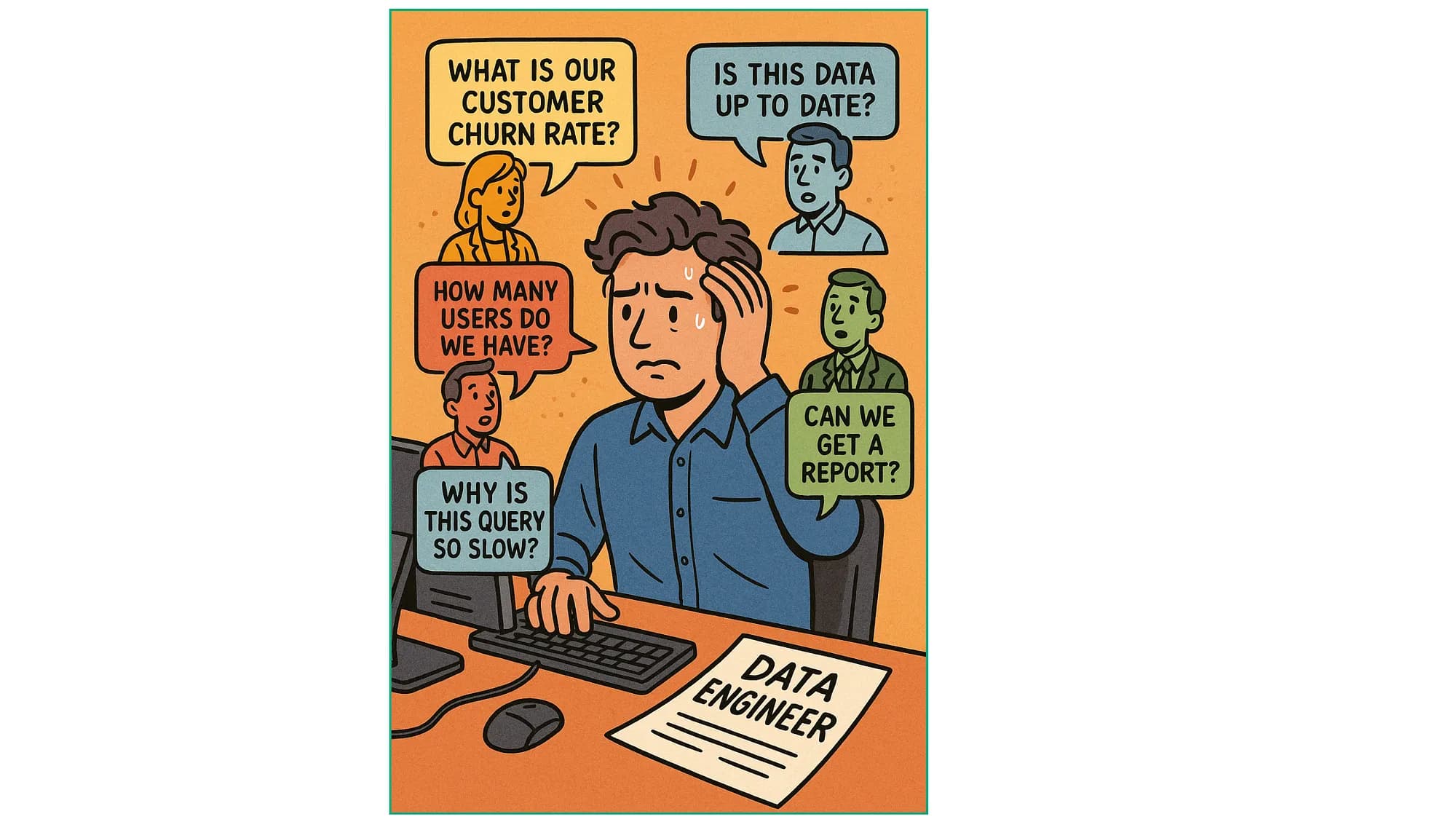
A product owner or marketer would notice something strange: a referral channel suddenly spiking, a specific auction format underperforming, a region falling behind. They'd file a ticket. That ticket would land in a backlog behind dozens of others. If it was lucky, it would get picked up in a few days. If not, it might never get touched.
Compounding the backlog was the simple fact that Tilt has one full-stack data scientist. Unless you could write SQL yourself, every question from "what happened to yesterday's referral traffic?" to "which cohort is dropping off at checkout?" went onto that person's plate. Even when the team triaged ruthlessly, the queue grew faster than one person could keep up with.
Meanwhile, the underlying issue (maybe an abused referral link or a broken funnel) could be costing hundreds of dollars per hour in lost profit.
Small questions turned into big delays. The team was constantly choosing between slowing down to wait for clean analysis, or making decisions on gut feel and partial information. Neither was acceptable.
The Shift with Contextflo
Contextflo sits on top of the data and turns "I think something's off" into "Here's what's happening and why", in minutes instead of days.
Now, when a metric shifts, the person who spots it can ask the question directly in Claude, get the analysis from the LLM connected to Contextflo, and share a link to the answer in Slack or a doc. No ticket. No backlog. No waiting for a weekly meeting.
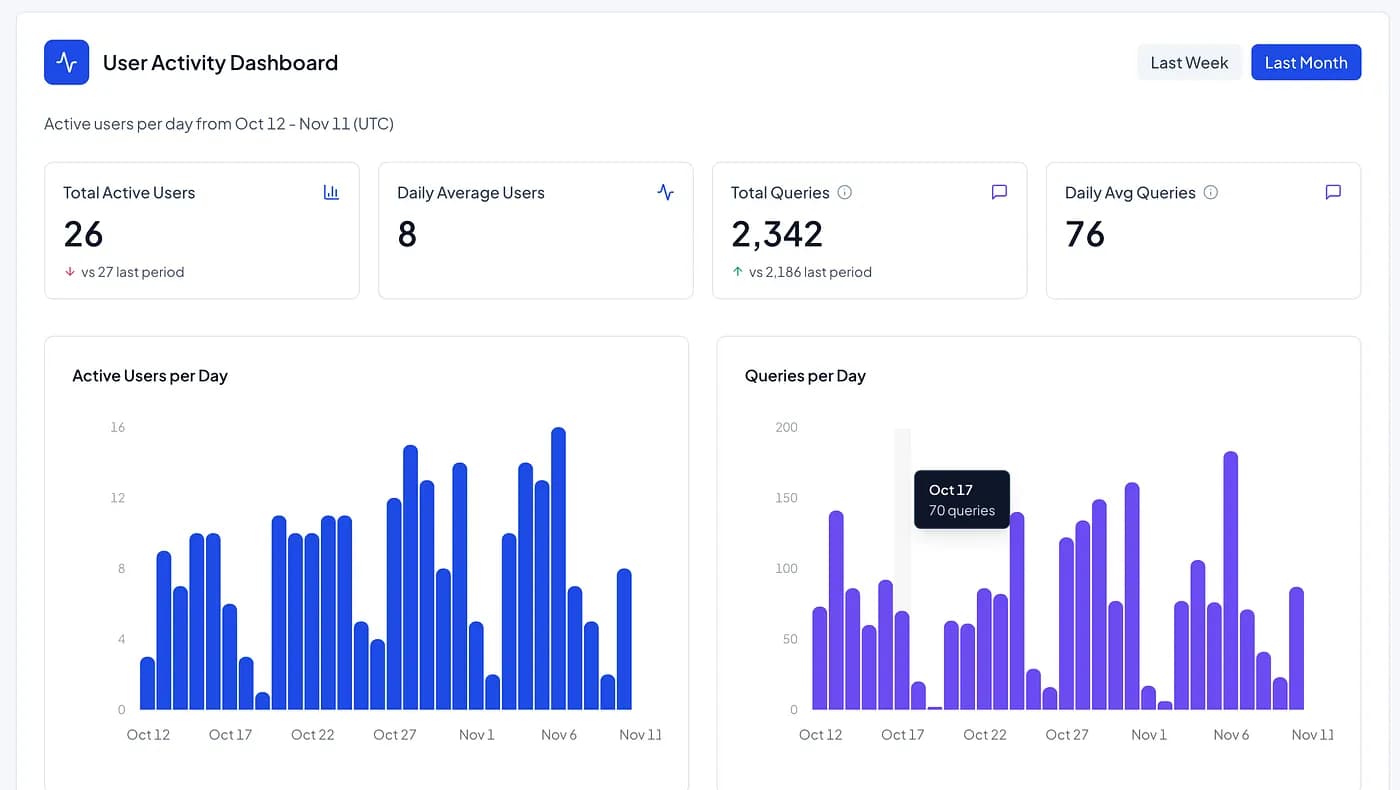
In the first months after rolling out Contextflo, Tilt's teams ran ~2k queries/month across operations, growth, and customer experience, roughly ~75 queries per day. A year in, that is about 6,000 queries a month from 30+ people every week. More importantly, those questions were answered in minutes instead of days, and most never hit the data backlog.
You could always connect your LLM directly to your warehouse, but that would be flying a plane without any navigation equipment; with Contextflo, you have an altimeter, GPS and a full cockpit dashboard.
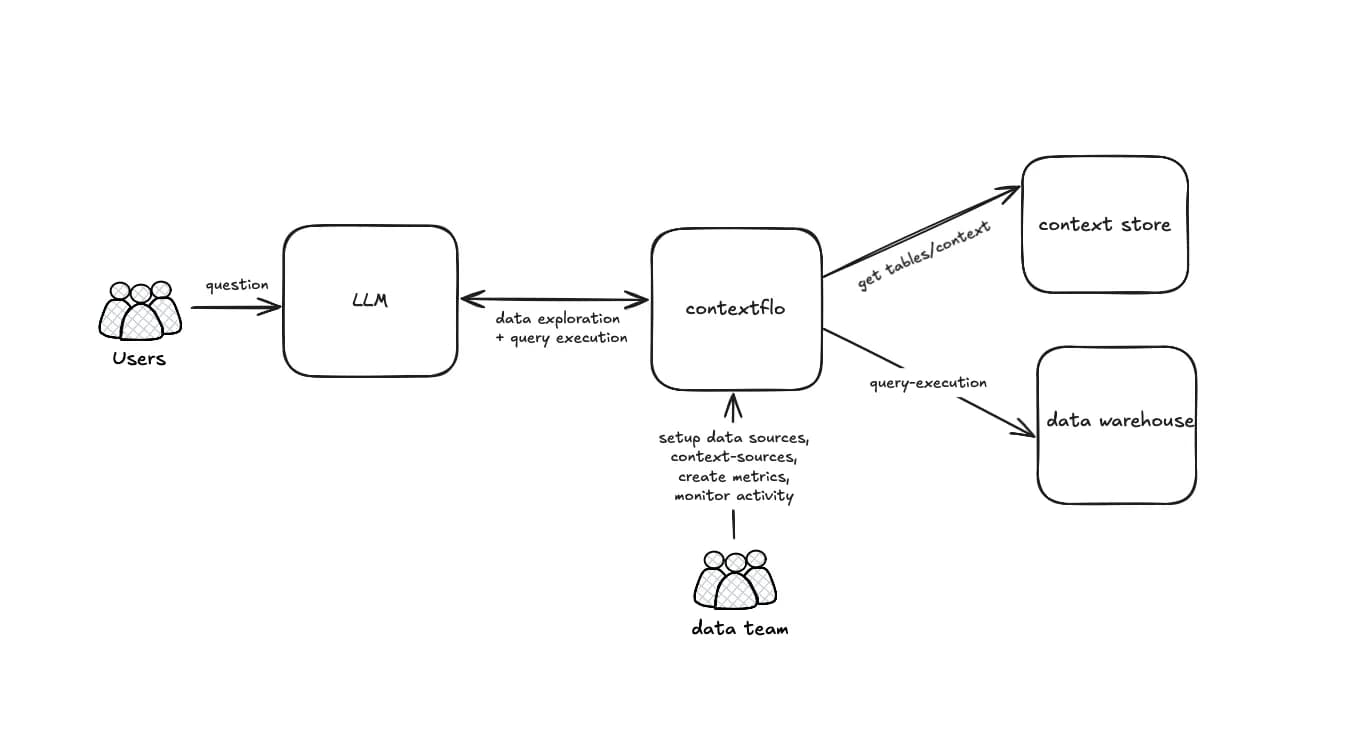
Let's see it in action with an example. Here, Hedi asked about DTS (Daily Transacting Sellers):
Contextflo in Action: The Coupon Boost Investigation
On October 28, 2025, a teammate suspected coupon boost discounts weren't being applied correctly. Here's what happened next:
The Investigation (5 minutes total)
- •Told Claude the issue in natural language
- •Claude used Contextflo tools to explore boosts, orders, billing, and discount tables
- •Tested core logic: identified orders where boost was activated, minimum spend was met, but discount wasn't applied
- •Ran negative and positive controls, performed temporal analysis on October usage patterns
The Result
No widespread bug found. The system was working as designed. User reports were likely due to timing issues or eligibility misunderstandings. A non-technical team member disproved the hypothesis in minutes, saved engineering from chasing a phantom issue, and prevented what could have been a multi-day investigation.