Now you can do analytics without ETL
Hi, this is Vivek, building Contextflo. I share practical notes on getting answers from your data, a couple of times a month.
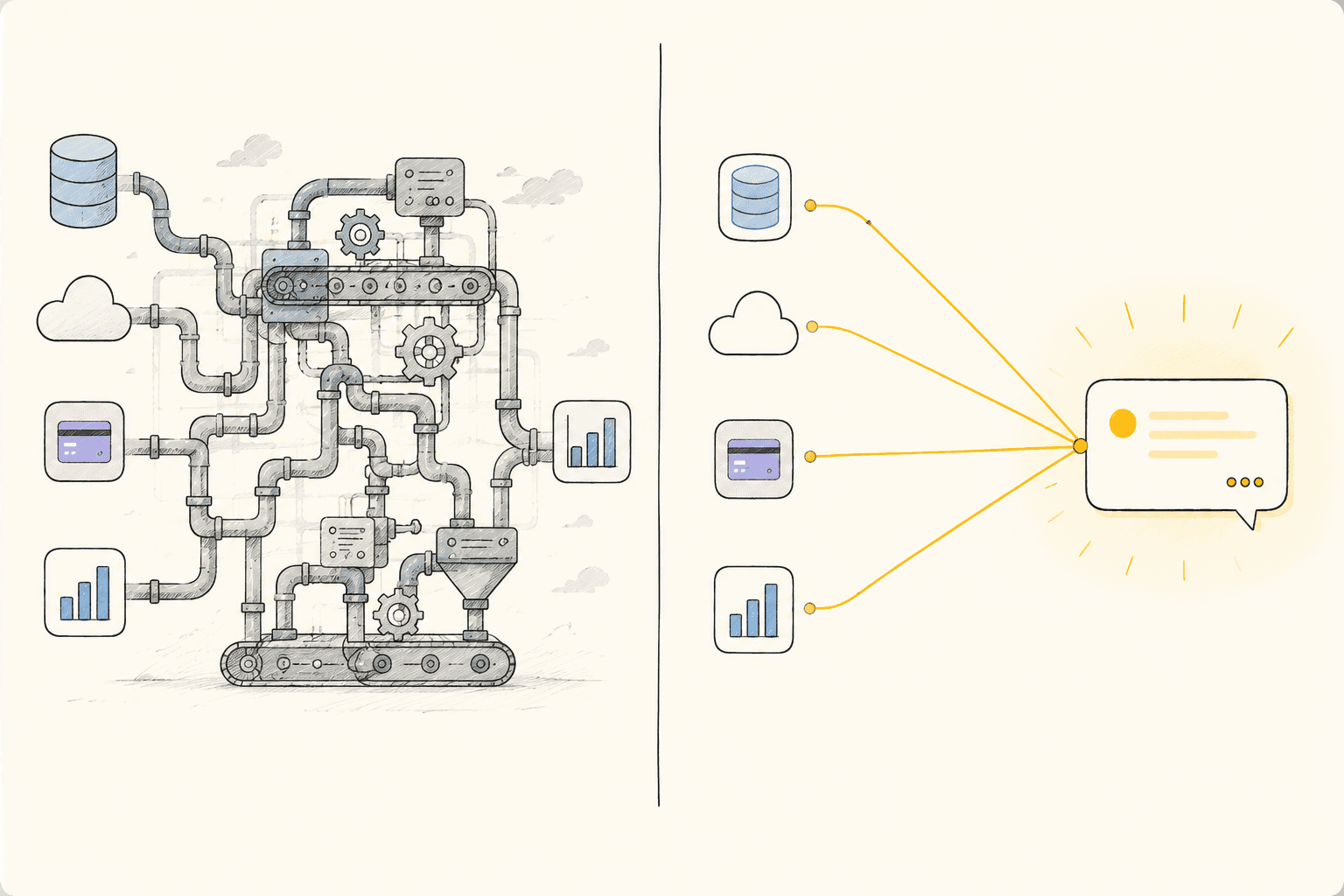
Your data lives in five different places. The traditional path to analytics is: build ETL pipelines, load everything into a warehouse, model the data, then query it. That takes weeks. You can start getting answers right now.

The ETL tax
Before anyone at your company can ask what revenue by channel looks like this month, somebody has to:
- Set up a data warehouse (BigQuery, Snowflake, Redshift)
- Build ETL pipelines from every source
- Handle schema changes, deduplication, incremental loads
- Model the data so the tables make sense together
- Connect a BI tool and build dashboards
That is weeks of engineering before a single business question gets answered. For many startups the pipeline is never done. It is always breaking, always behind, always missing the one source somebody needs.
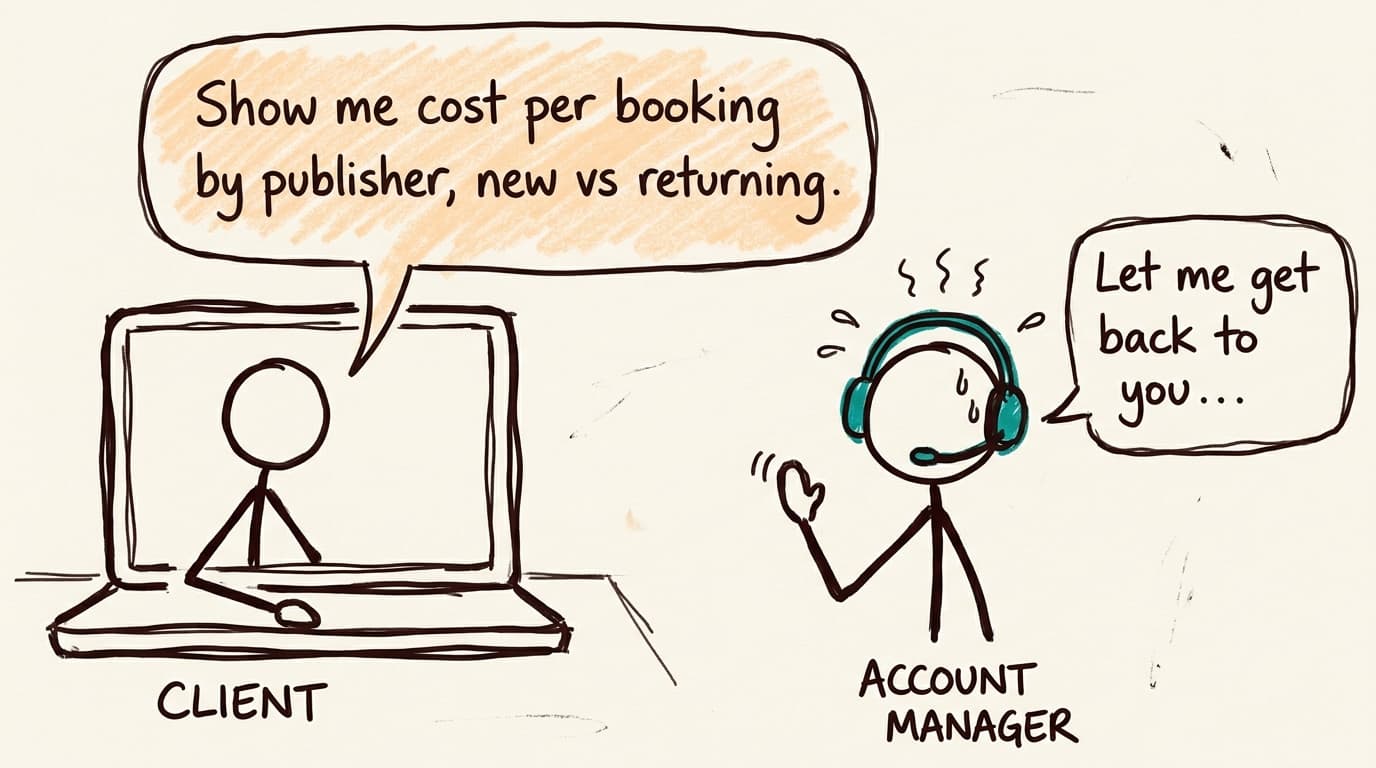
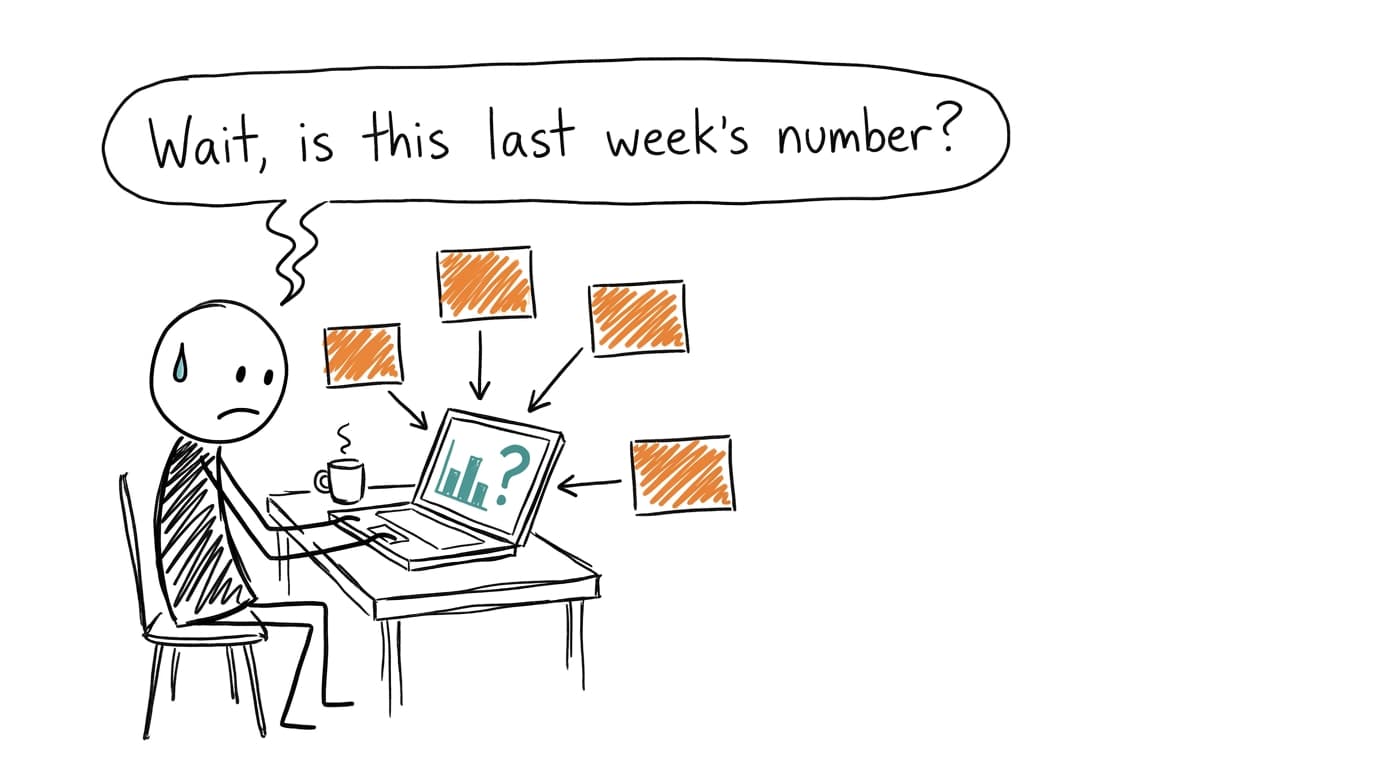
Meanwhile the founder is still asking an engineer to pull Stripe revenue and compare it to what Amplitude shows for paid conversions. The engineer writes two queries, pastes them into a spreadsheet, and joins the data by hand. Every time.
What if you could skip straight to the answers?
Contextflo connects directly to your data sources (your database, Stripe, Amplitude, Google Analytics, HubSpot) and lets you query across all of them in one conversation. No warehouse required for API sources, no pipelines to build first.
How does our Amplitude retention compare to Stripe revenue by monthly cohort?
Which campaigns in GA drove the most revenue in Stripe last quarter?
Show me deal pipeline by stage from our CRM alongside actual revenue from the database.
Each of those crosses two systems that have never been in the same query. That is the class of question a pipeline exists to enable, and the reason it usually takes a quarter to get one.
What connects
| Databases | API sources |
|---|---|
| Postgres | Stripe |
| BigQuery | Amplitude |
| Snowflake | Google Analytics |
| ClickHouse | HubSpot |
| Redshift | |
| Databricks |
A real example
One of our customers is a private equity fund. Their deal data lives across multiple systems: different databases, different formats, different teams managing each. Before Contextflo, a unified view of the portfolio meant asking someone to pull from each system and stitch it together in a spreadsheet.
Now a director at the fund, who does not write SQL, asks questions across all of it in one conversation. No pipelines were built. No warehouse was provisioned. They connected their sources and started asking.
When you still need ETL
This does not replace ETL for everything, and it is worth being precise about where the line is.
If you are processing millions of events, need deduplication, or have transformations feeding ML models, you want proper pipelines and a warehouse. Querying APIs directly also means you are subject to their rate limits and their idea of how far back history goes, which is fine for a question and bad for a nightly job.
There is a subtler one too. A pipeline is where you fix data: dedupe, conform currencies, resolve one customer across systems. Query it live and that cleanup has not happened, so cross-source answers are only as good as how well the raw sources already agree. Often that is good enough to be useful and worth knowing before you trust a number.
But if your immediate problem is that answers live in five places and nobody has time to build pipelines, you do not need to wait. Connect the sources, start asking, and build the warehouse later when it earns itself.
Start now, optimise later
The best analytics setup is the one your team actually uses. Connect your sources in about ten minutes and let people start asking across all of them today.
Here is a more in-depth look at Contextflo and how it works.
What is Contextflo?
Contextflo is a governed context layer between your data and the AI your team already uses. Connect your warehouse once, and your team asks questions in their own Claude or ChatGPT. The model writes and runs the SQL; Contextflo supplies the definitions, the per-user access control, and the audit that make the answers trustworthy. Your data never moves, and you do not need a data team.
How it works
Your team queries in their own Claude or ChatGPT over MCP, so you bring any agent rather than a locked-in bot, and every answer comes back with the SQL shown and access enforced per user.
Find out if Contextflo is the right fit for you.
See how teams use Contextflo

Related posts


Keep reading
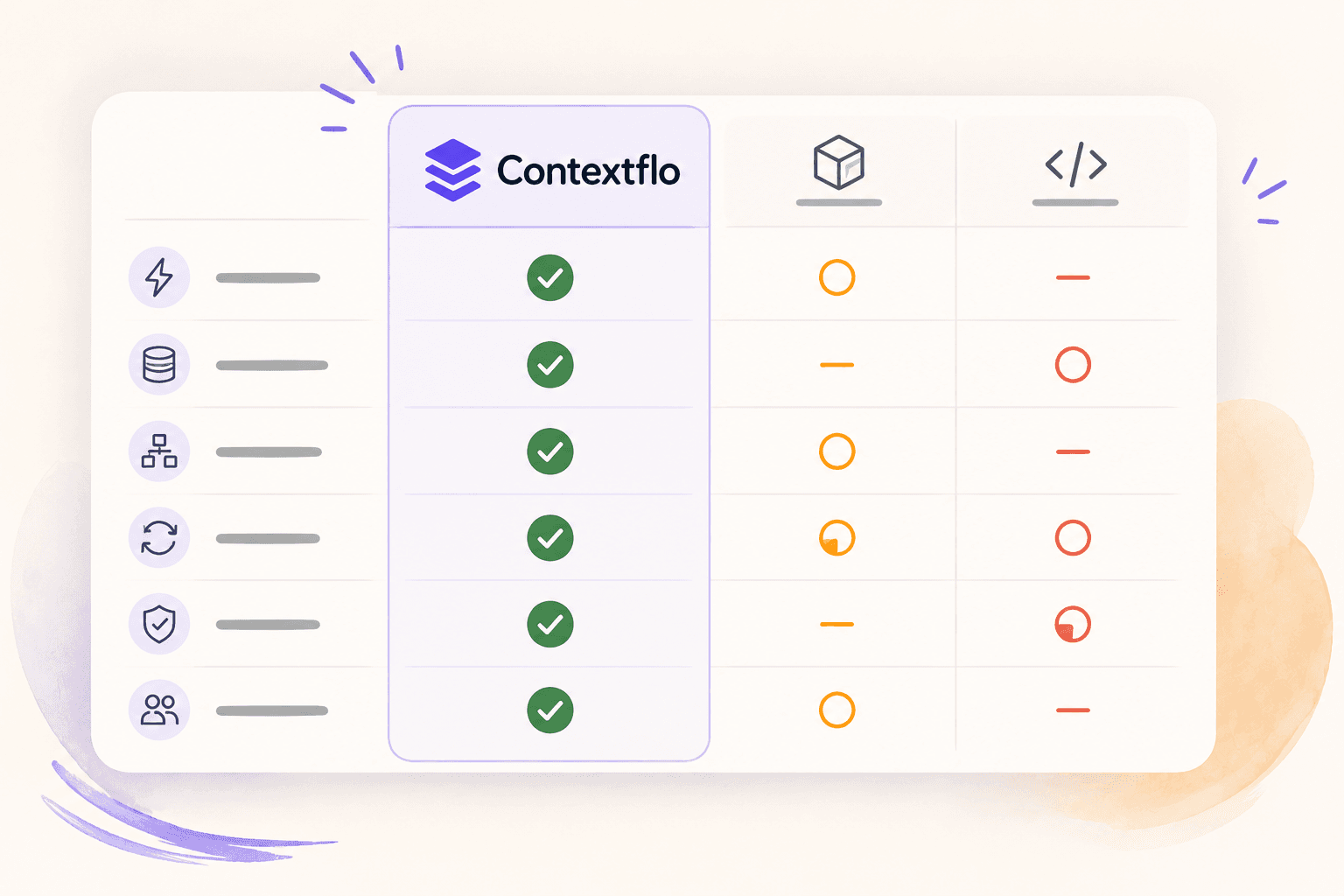
Conversational analytics: 5 ways to set it up, compared
7 min read
How to connect Claude to BigQuery? What works and what doesn't in 2026
8 min read
How to connect Claude to Postgres without giving it write access
7 min read

How to build a BI dashboard with Claude that your team can actually trust
8 min read
How to give Claude read-only access to your database (it isn't always the default)
7 min read

You connected your warehouse to Claude, now what?
5 min read

The official Postgres server for Claude is archived. Here's what to use instead.
7 min read

What should go in the board deck this month? How to pull metrics from HubSpot and Stripe with AI
7 min read

Which closed deals churned within a year? How to connect HubSpot and Stripe with AI
8 min read