How agency account managers can answer client questions without waiting on an analyst
A client asks the question the dashboard wasn't built for, mid-call. How agency account managers answer it themselves in Claude or ChatGPT, with the work shown, instead of routing it to whoever writes SQL and answering next Monday.
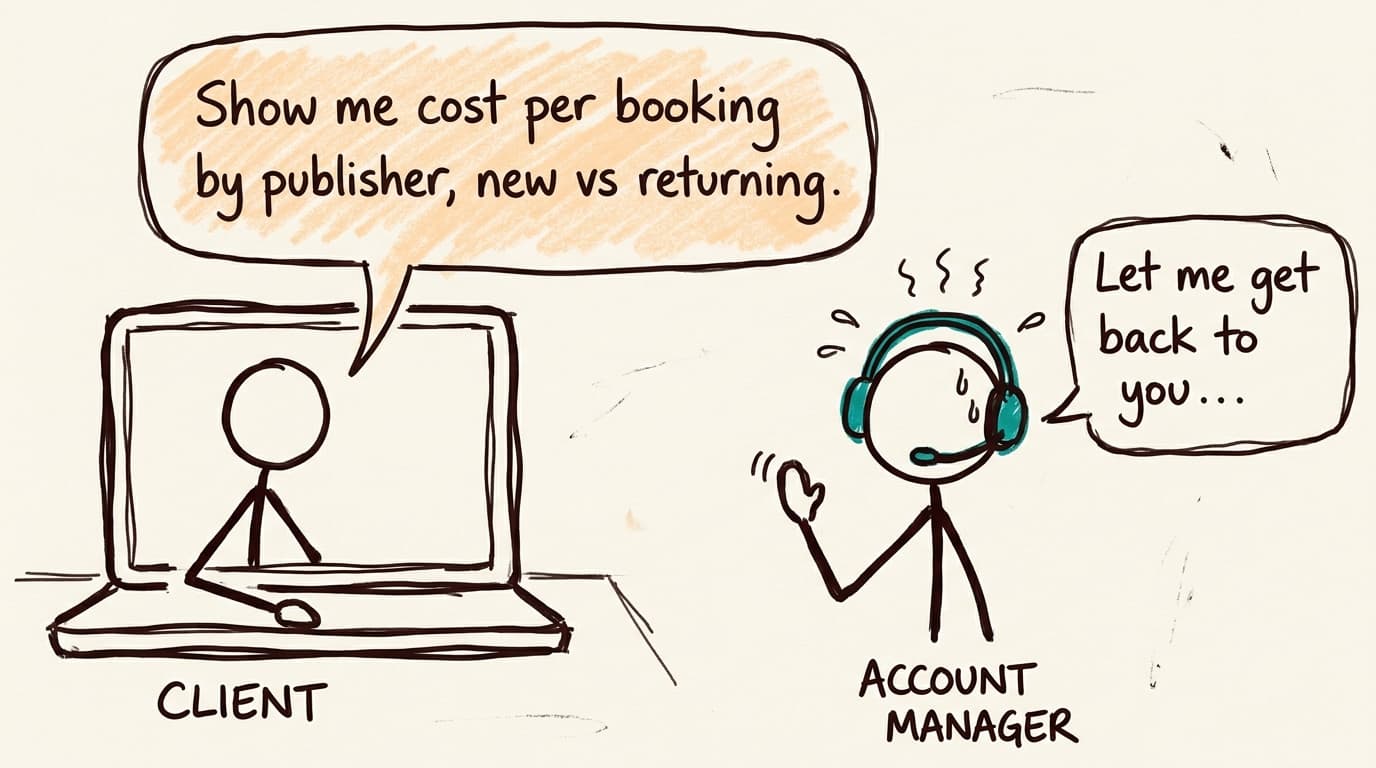
The client dashboard is up. It shows last week: spend against the plan, leads by campaign, bookings. Then the client asks the question the dashboard wasn't built for. "Show me cost per booking by publisher, new versus returning." For a long time the honest answer was "let me get back to you," which meant asking whoever writes SQL, waiting, and answering next Monday. On one agency using Contextflo, the account manager answers on the call.
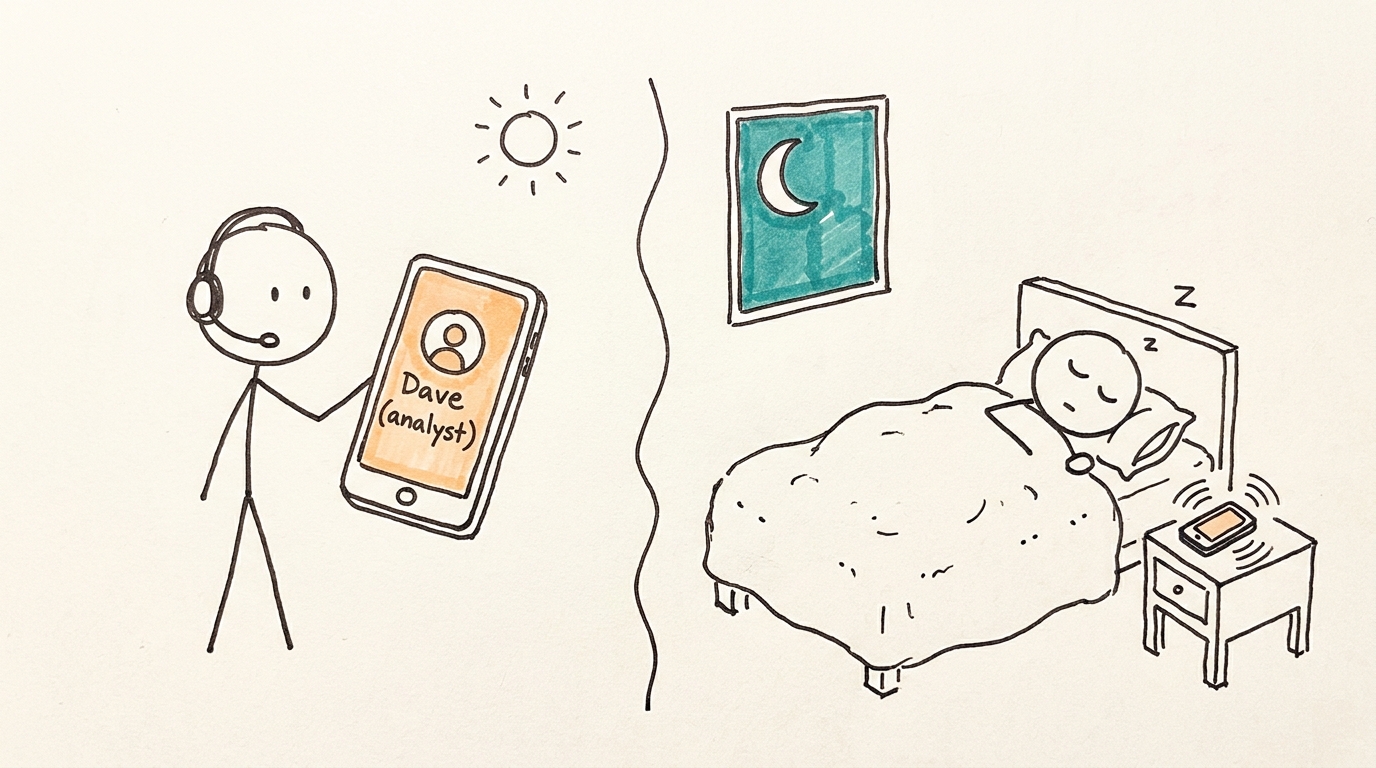
Here is how that question usually travels. It goes to the one person who can query the data, who is three time zones away and asleep. It lands in a queue behind every other client's asks. The answer arrives after the call it was for, so the follow-up becomes next week's agenda item, and a week of the client's budget runs on a hunch.
The follow-up, answered
Account manager: Cost per booking by publisher for last month, split new customers versus returning.
Claude/ChatGPT: Here it is by publisher, with new and returning side by side. Returning customers cost about the same everywhere. New customers are the spread: one publisher is far more expensive per new booking than the rest. The query is underneath.
Account manager: Is that publisher expensive across the board, or is it one campaign?
Claude/ChatGPT: One campaign. The other campaigns on that publisher are in line with everyone else. That campaign started mid-month and almost all of its bookings are returning customers, so it's paying new-customer rates to reach people who were coming back anyway.
Account manager: So we're not buying new customers there, we're buying old ones twice.
Claude/ChatGPT: That's what the numbers show. Here are the bookings from that campaign with the customer's first-order date next to each.
The account manager never wrote a query. They asked the client's question in the client's words, got the answer with the work shown, and the call moved on to what to do about that campaign instead of ending on "I'll check."
What it has to know about the account
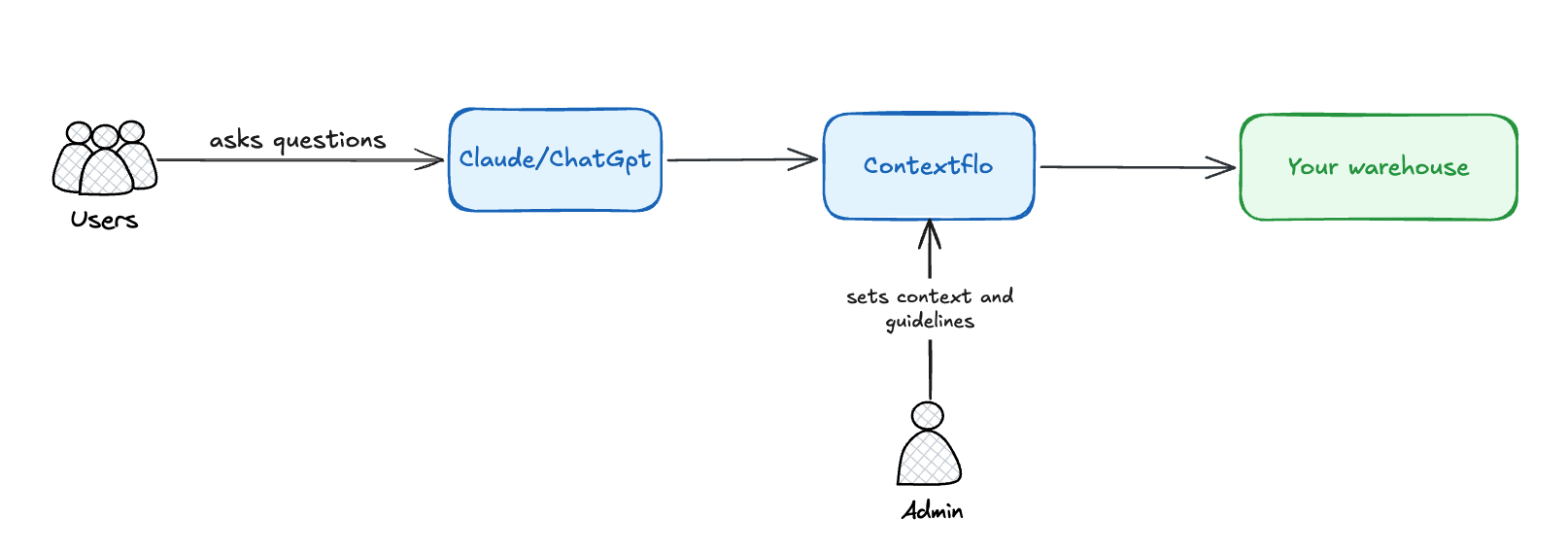
For any of that to come back right, the AI has to know things about the account it can't see on its own. Which source is the truth for bookings. What counts as a new customer here: first order ever, or first order this year. How a booking gets attributed to a publisher when the customer saw three ads. Where the media plan lives and what "pacing" means against it. Every agency has those answers, and they usually live with the one person who built the reporting.
Once those are written down, the AI isn't guessing anymore. They don't stay written, though. Campaigns get renamed, a client changes what counts as qualified, and an AI working off last quarter's setup is confidently wrong in a new way. Kept current, they work for every account manager's AI, whichever one they use, off the same definitions.
Contextflo is the layer that holds that, handles the context drift as the account changes, and puts it in front of every AI the team uses. The agency gets the self-serve without building or maintaining the layer itself.
Putting a number in front of a client
An account manager can't look at a number and tell whether an AI made it up. Internally, that's a mistake someone catches later. On a client call, it's the agency's credibility. So the query sits under every answer, and the person who owns the data checks the first few before anyone quotes them live. The definitions are written once, so "lead" means the same thing every week and for every account manager on the account. And the week's set of questions gets saved, so Monday's read-out is a rerun, and a new client starts from the same questions pointed at a new account.
That confirmation is the part I wouldn't skip. The taxonomy and the attribution logic need someone who knows the media plan to sign off before the first read-out goes out under them. Skip it and the first numbers said out loud to a client are the ones that need correcting.
Setting it up
- Connect the agency's data to Contextflo.
- Have the person who built the reporting write down the handful of definitions client questions depend on: what a new customer is, how a booking is attributed, where the plan lives. Once per client, instead of once per question.
- Decide who sees what. Account managers only see the accounts you open to them.
- Account managers ask in the Claude or ChatGPT they already have.
On the agencies we see doing this, the weekly read-out stops being a request and becomes a rerun, and the client's follow-up gets answered while the client is still on the call.
The Monday deck still goes out. The question that used to wait for next Monday doesn't.
See how teams use Contextflo

See Contextflo in action
Ask a question in plain English against a live demo dataset. No setup, no login.
Open the playgroundKeep reading
Conversational analytics: 5 ways to set it up, compared
7 min read
Connect Claude to BigQuery: the connector, the errors, a team path
8 min read
Connect Claude to Postgres: MCP Setup Guide
8 min read
How to build a BI dashboard with Claude that your team can actually trust
8 min read
Is it safe to give Claude read-only access to your database?
5 min read
You connected your warehouse to Claude, now what?
5 min read