How ops teams catch a problem before the tickets start
Checkout starts failing for a slice of customers and nobody notices until the tickets arrive. How ops teams write the check once in Claude or ChatGPT, run it on a schedule, and get the alert before support does.

Checkout starts failing for a slice of customers. Quietly, on one payment method, and only on mobile. Nobody notices. The dashboard still shows orders coming in, because most of them are. The first sign is support, hours later, seeing the same complaint in one ticket and then a pattern. On one team using Contextflo, the check that would have caught it runs on its own.
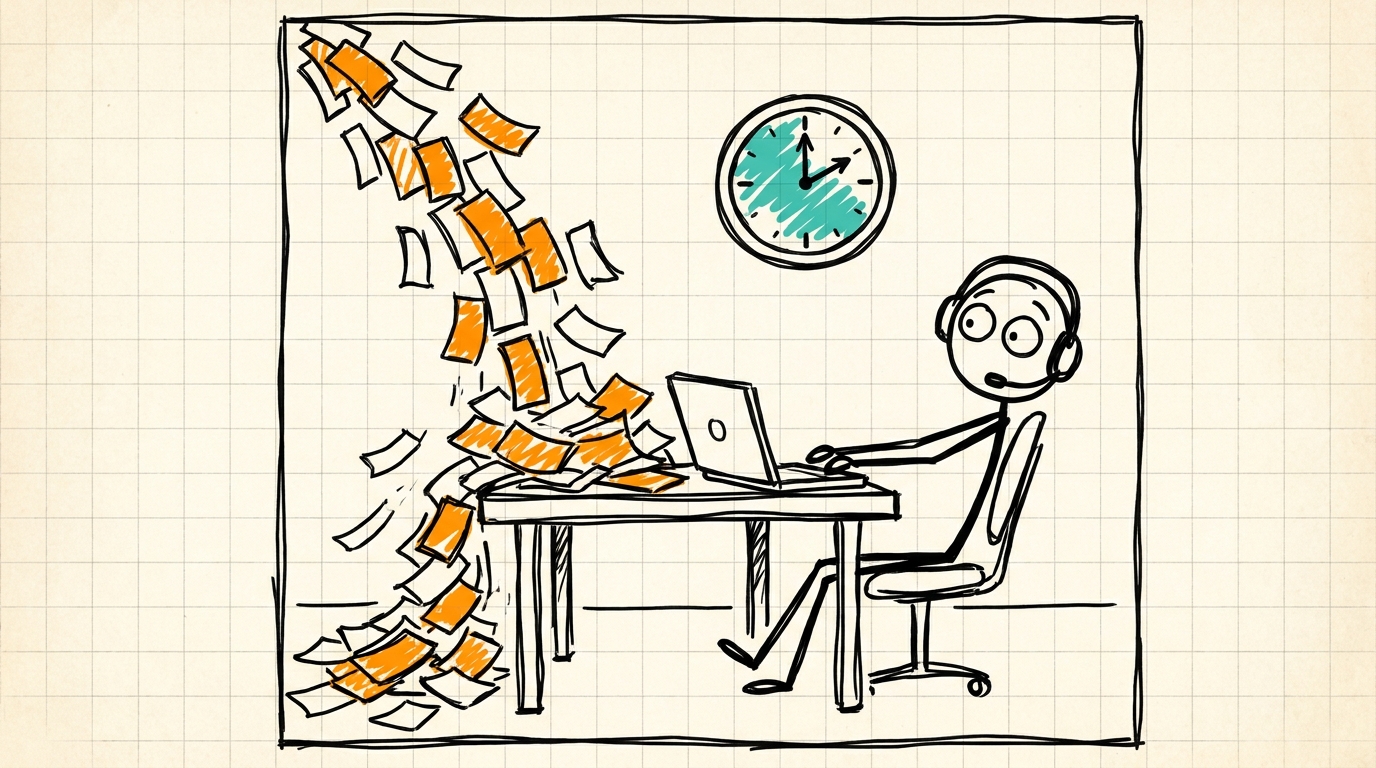
Someone eventually notices a dip. Only then does anyone write the query that explains it, and that query starts from zero every time: reopen the event data, retype the same filter, rebuild the same breakdown. Nothing about yesterday's check carries into today's. The incident has been live the whole time.
Writing the check once
Ops: Did any checkout step see a spike in failures in the last hour? Break it out by payment method and device.
Claude/ChatGPT: One. Failures on one payment method are up against the previous hour, and almost all of them are on mobile. Every other step and method is flat. The query is underneath.
Ops: Save this. Run it every hour and post it to the ops channel.
Claude/ChatGPT: Saved and scheduled. Each run does the same breakdown and only posts when something crosses the line you set, with the breakdown and the query that found it.
The next time it happens, the alert is waiting in the channel before anyone has opened a ticket. Whoever picks it up doesn't have to reconstruct what was asked. The question is right there, and so is the query behind it.
What it has to know to get this right
That check is one sentence, and the sentence only works because the AI knows things about this company it can't see on its own. Which events mean a checkout attempt and which mean a failure, as opposed to a customer who wandered off. What counts as a spike here versus the normal noise of a Tuesday afternoon. How payment methods and devices are labeled, so "mobile" means the same thing the app team means by it. Which store or region a failure belongs to. Every ops team has those answers, and they usually live with the one person who wrote the last version of the query.
Those answers drift. A new payment method shows up, an event gets renamed in a release, and a check that was right last quarter is quietly wrong now. Written down and kept current, they work for every AI the team uses, whichever one that is, off the same definitions.
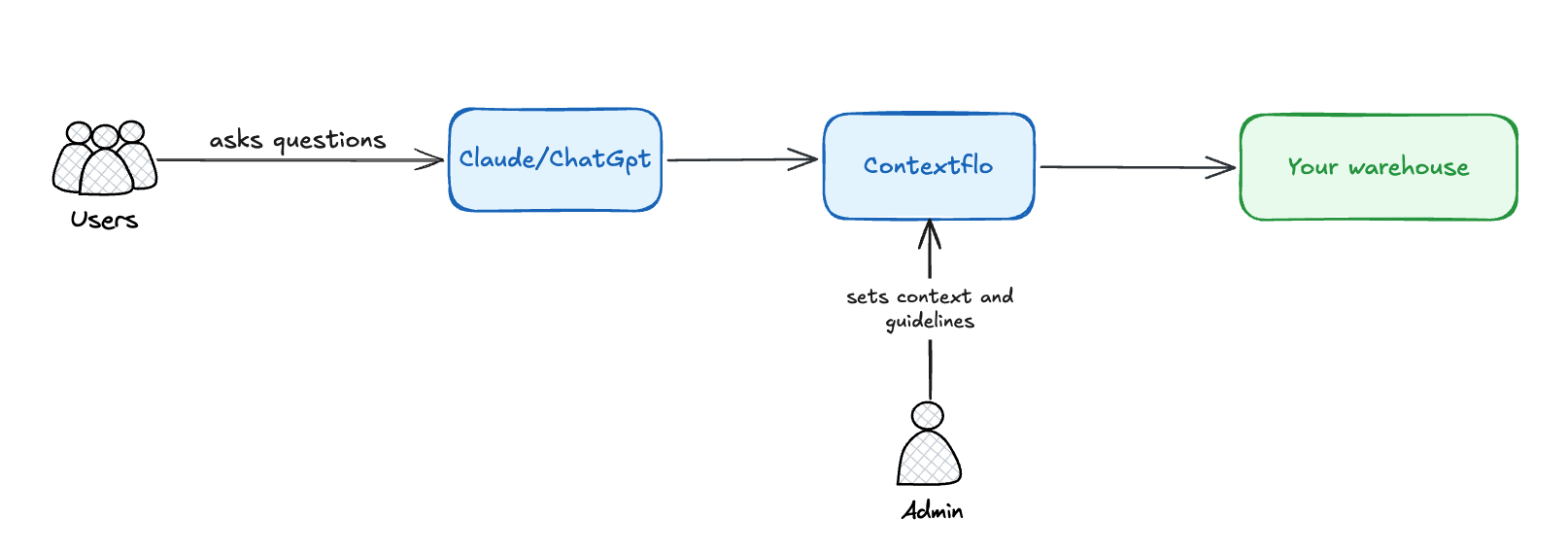
Contextflo is the layer that holds that, handles the context drift as your data changes, and puts it in front of every AI your team uses. Your org gets the standing check without building or maintaining the layer yourself.
Trusting an alert you didn't ask for
An alert at the wrong threshold fails in one of two ways. Too sensitive and it becomes noise everyone learns to scroll past. Too loose and it stays silent while checkout is broken. Neither one is a check.
What makes it hold up is the same as any check a person would trust. The definitions are written once, so "failure" and "spike" mean the same thing on every run, whoever set it up. The query is shown under every alert, so whoever picks it up can see what was actually asked before they act on it. And the check is saved, so tomorrow's run is the same run, instead of something rebuilt from memory by whoever is on that morning.
The first threshold is the part that takes a conversation. Someone who knows what a real incident looks like has to say where normal noise ends, and the first week of alerts is for tuning that line before anyone trusts it. I'd plan on that week. Skip it and the channel fills with false alarms until people mute it, and then the real one gets muted too.
Setting it up
- Connect your data to Contextflo.
- Have someone who knows the events write down the handful of definitions the check depends on: what a failure is, what a spike is, how methods and devices are labeled. Once.
- Decide who can see what. People only see what you open to them.
- Write the check in the Claude or ChatGPT you already use, save it, schedule it, and pick where it posts.
On the teams we see doing this, the checks that run themselves are the ones that catch things. The handful they care about turn the morning triage into a short list that was waiting, instead of a search through last night's events.
The team didn't buy a monitoring platform. They turned one recurring question into something that watches for them.
See how teams use Contextflo

See Contextflo in action
Ask a question in plain English against a live demo dataset. No setup, no login.
Open the playgroundKeep reading
Conversational analytics: 5 ways to set it up, compared
7 min read
Connect Claude to BigQuery: the connector, the errors, a team path
8 min read
Connect Claude to Postgres: MCP Setup Guide
8 min read
How to build a BI dashboard with Claude that your team can actually trust
8 min read
Is it safe to give Claude read-only access to your database?
5 min read
You connected your warehouse to Claude, now what?
5 min read