How a one-person marketing team turns the weekly export into a newsletter
Every Monday the same export lands and one person has to turn it into a newsletter. How a solo marketer drops the file in, asks what changed in Claude or ChatGPT, and pastes the answer, without rebuilding the comparison every week.

Monday. The same export lands, same columns, new numbers. There is no analyst here, just one person running marketing on their own, and somewhere in that file is the line that becomes this week's newsletter. On one team using Contextflo, they drop the file in and ask.

The comparison gets rebuilt from zero every week. Open the new export, open last year's sheet, line the weeks up, fix the formula that broke because a column moved, and read down the rows until something stands out. Then the newsletter goes out and the whole thing gets thrown away. Nothing carries forward to next Monday, and the person doing it is the same person who has to write the thing.
Drop it in and ask
Marketer: Here's this week's export. What changed versus last week, and versus the same week last year?
Claude/ChatGPT: Two things moved. One channel is up on both comparisons. One segment is down against last year and flat against last week. Everything else is inside its usual range. The query is underneath, lined up against last year's sheet on the matching week.
Marketer: Give me that as two sentences I can paste into the newsletter.
Claude/ChatGPT: This week's growth came from one channel, and it's up on last year too, so it isn't a blip. One segment is quieter than it was this time last year, and that's the one to watch before next week's send.
The file changes every week. The question barely does. Next Monday it's the same question against the new file, and the answer comes back in the same shape, with the work shown underneath it.
What it has to know about the file
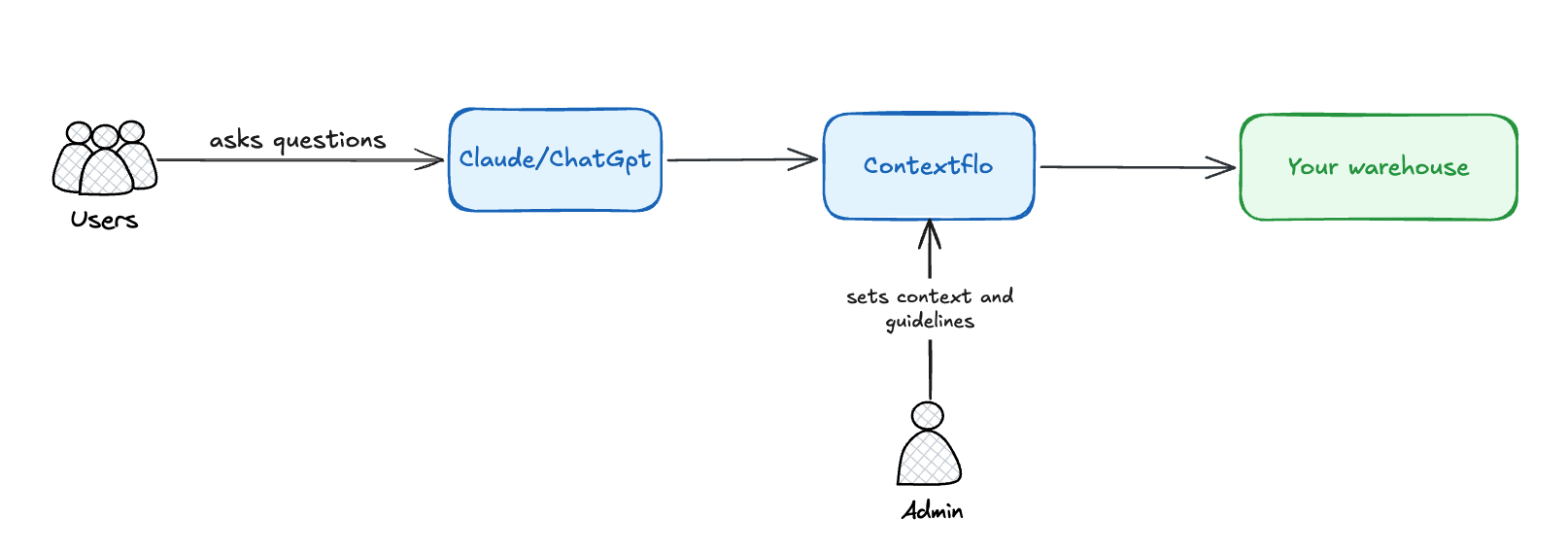
For that answer to be right, the AI has to know things about the file that aren't in the file. Which column is signups and which is active. What "active" means here: opened, clicked, or bought. Which sheet is the one to compare against, and which week lines up with which when the calendar shifts. What counts as a channel when the platform splits one into three. Those answers live in the marketer's head, and in a formula somewhere in last week's sheet.
They also change. The platform renames a column, adds a new one, or the export comes out a different shape one week and the old formula quietly points at the wrong thing. Once the answers are written down and kept current, they work for whichever AI the marketer uses, off the same definitions.
Contextflo is the layer that holds that, handles the context drift as the file changes, and puts it in front of whichever AI they use. A one-person team gets the self-serve without building or maintaining any of it.
Trusting a line before it goes out
The number goes into something people read, and there is no analyst to catch it first. That is the whole stake.
What makes it safe to paste is plain. The query is shown under the answer, so the marketer can see which weeks were compared and which columns were used before anything goes out. "Active" and "signup" mean the same thing every week because they were written down once. And the question that worked is saved and asked again, so next Monday isn't a fresh guess at what to compare.
The first week is setup: getting last year's sheet in and the columns understood. And when the export changes shape, the first upload after that deserves a second look before the answer is trusted. I'd treat that look as part of the routine.
Setting it up
- Upload last year's sheet, or whatever the weekly numbers get compared against, once.
- Write down what the columns mean, once.
- Each week, upload the new export and ask in the Claude or ChatGPT you already use.
- Save the question that works.
On the one-person marketing teams we see doing this, Monday stops being a rebuild. It becomes one question and a paste.
Nobody handed this marketer an analyst. They stopped rebuilding the same view every Monday.
See how teams use Contextflo

See Contextflo in action
Ask a question in plain English against a live demo dataset. No setup, no login.
Open the playgroundKeep reading
Conversational analytics: 5 ways to set it up, compared
7 min read
Connect Claude to BigQuery: the connector, the errors, a team path
8 min read
Connect Claude to Postgres: MCP Setup Guide
8 min read
How to build a BI dashboard with Claude that your team can actually trust
8 min read
Is it safe to give Claude read-only access to your database?
5 min read

You connected your warehouse to Claude, now what?
5 min read