How customer service reps can resolve tickets without depending on the data team
A support rep traces a customer's missing refund in plain language, finds other returns stuck the same way before those customers write in, and replies without waiting on the data team. How it works, whether it's reliable, and what it takes.

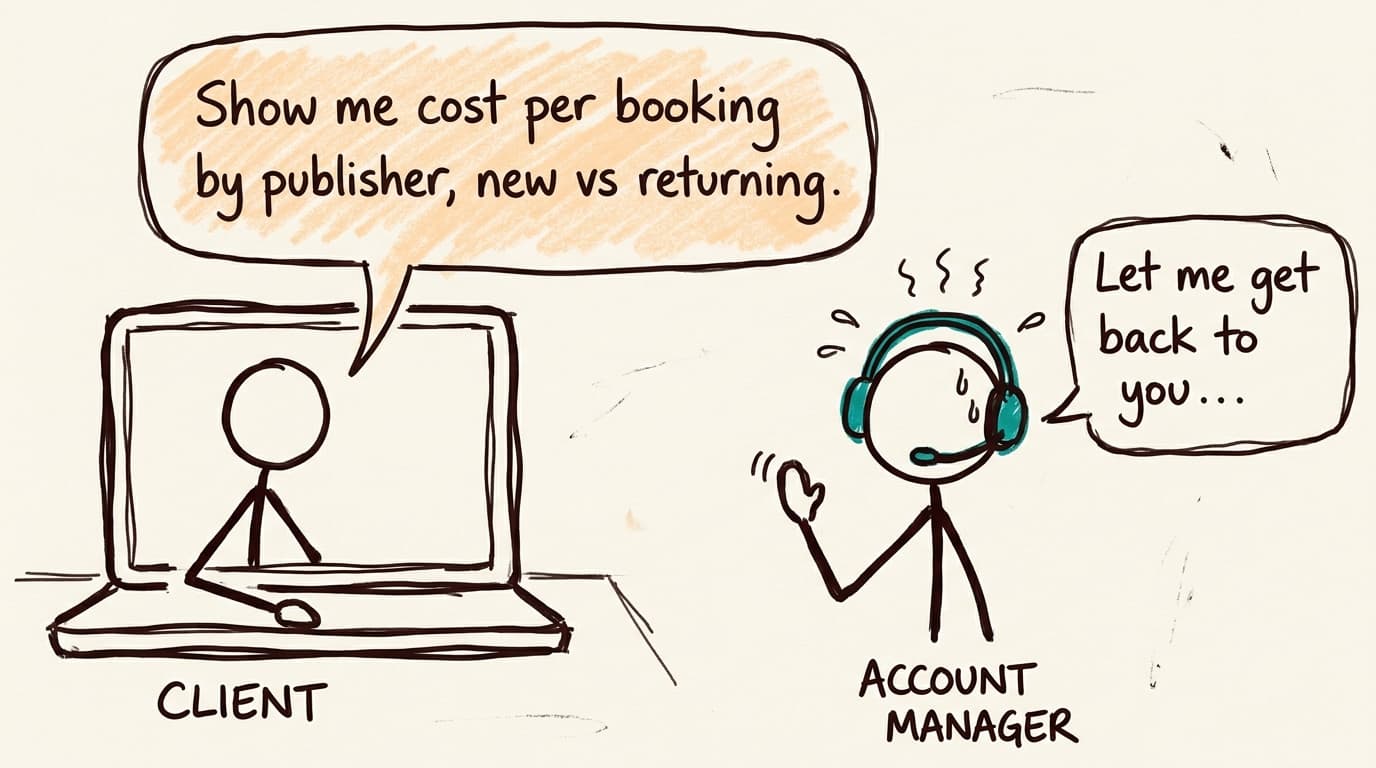
A ticket lands. A customer sent a return back weeks ago and the refund never showed up. Nothing in the order history says why. The rep has two choices: file a request with the data team and wait their turn, or find out right now. On one team using Contextflo, the rep finds out.

Here is the shape of the second choice, with a returns example.
Rep: This customer returned an order weeks ago and says the refund never came. What happened?
Claude/ChatGPT: The return was received at the warehouse, but the refund was never triggered. Here is the order and the return record, and the query that found them is underneath, so you can see where the answer came from.
Rep: Has this happened to anyone else?
Claude/ChatGPT: Yes. A short list of other returns were received and never refunded, and none of those customers have opened a ticket yet.
The rep never wrote a query and never opened the database. They asked the question they already had, in the words they already use, and had something to tell the customer before the ticket would have reached the top of the data team's queue. The follow-up is the part that matters: one ticket turned into every return stuck the same way, before those customers wrote in.
Where the answer comes from
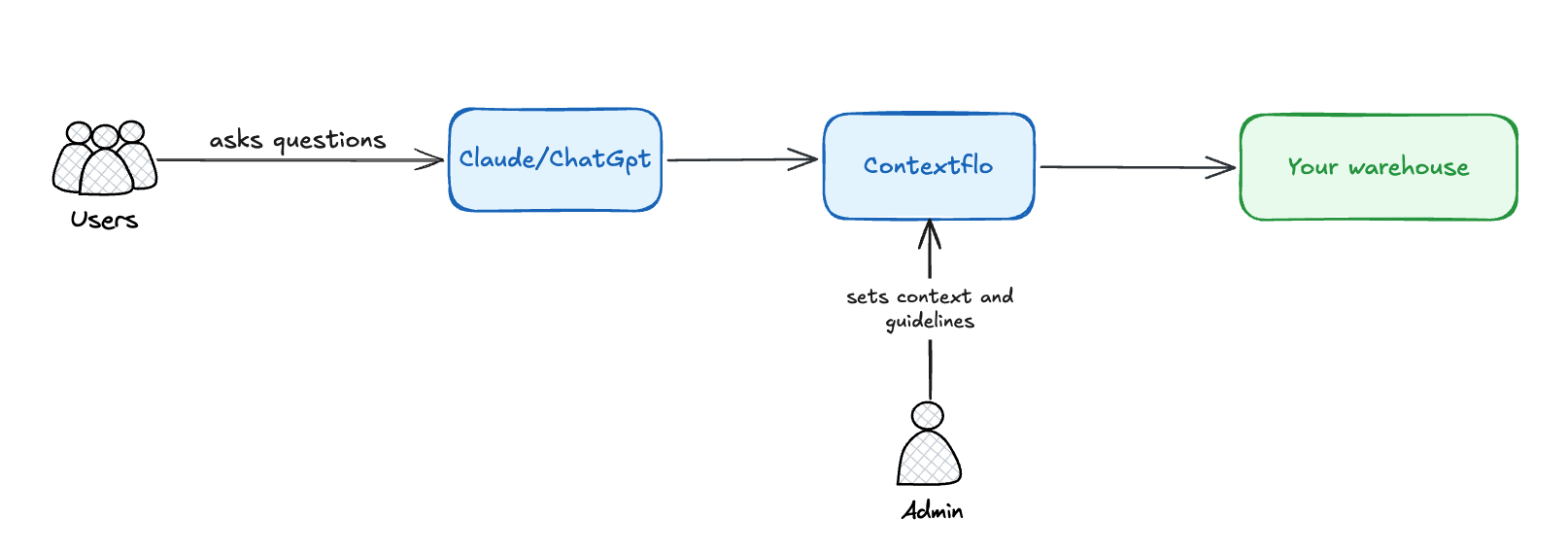
The rep isn't doing anything technical. They're typing a question into the Claude or ChatGPT their team already uses. The interesting part is what that AI knows before it answers.
For the answer to land, the AI has to know things about your company that it can't see on its own. Which table holds orders and which holds returns. What counts as a completed return here: received at the warehouse, inspected, or restocked? How refund turnaround is measured, and from which date. Whether a partial refund counts as a refund. Every team has answers to these, and most of them live in someone's head or a wiki nobody has opened since last year.
Write those down once and the AI stops guessing. Then keep them current, because tables get renamed and definitions drift, and an AI working off last quarter's notes is confidently wrong in a new way.
Once that exists, it works for everyone's AI, whichever one they use, off the same definitions. A rep gets the same answer the analyst would have. That's the point where self-serve stops being a thing only the data team can do.
Contextflo is the layer that holds all of that, handles the context drift as your data changes, and puts it in front of every AI your team uses. Your org gets the self-serve without building or maintaining that layer yourself.
Trusting it enough to reply
The rep is about to tell a customer what happened to their money. A wrong answer doesn't sit in a spreadsheet waiting to be noticed. It goes straight into a reply, and the customer acts on it. Confident-but-maybe-wrong is worse than no answer.
What makes it hold up is mostly boring. The team's terms were written down once, so "returned" and "refunded" mean the same thing on every ticket, whichever rep is asking. Every answer shows the work underneath it, so the rep can check it before replying, and so can anyone who reviews the reply later. And a trace that works gets saved, so the next rep asking the same kind of question gets the same answer instead of a fresh guess.
If those terms aren't written down first, the first few answers need correcting before anyone trusts the rest. I'd budget for that before the first ticket goes through.
Setting it up for your own team
Less than it sounds like.
- Connect your data to Contextflo.
- Have someone who knows the data write down the handful of terms and records that support tickets depend on. This is still the data team's work, but it's done once, instead of once per ticket.
- Decide what support reps can see. Reps only see what you open to them.
- Reps ask in the Claude or ChatGPT they already have.
On the teams we see doing this it isn't a one-off. Within a few weeks it's how reps handle every ticket of this shape: paste it in, trace it, check whether it's wider than one customer, reply.
The reps did not become analysts. They stopped waiting on them.
See how teams use Contextflo

See Contextflo in action
Ask a question in plain English against a live demo dataset. No setup, no login.
Open the playgroundKeep reading
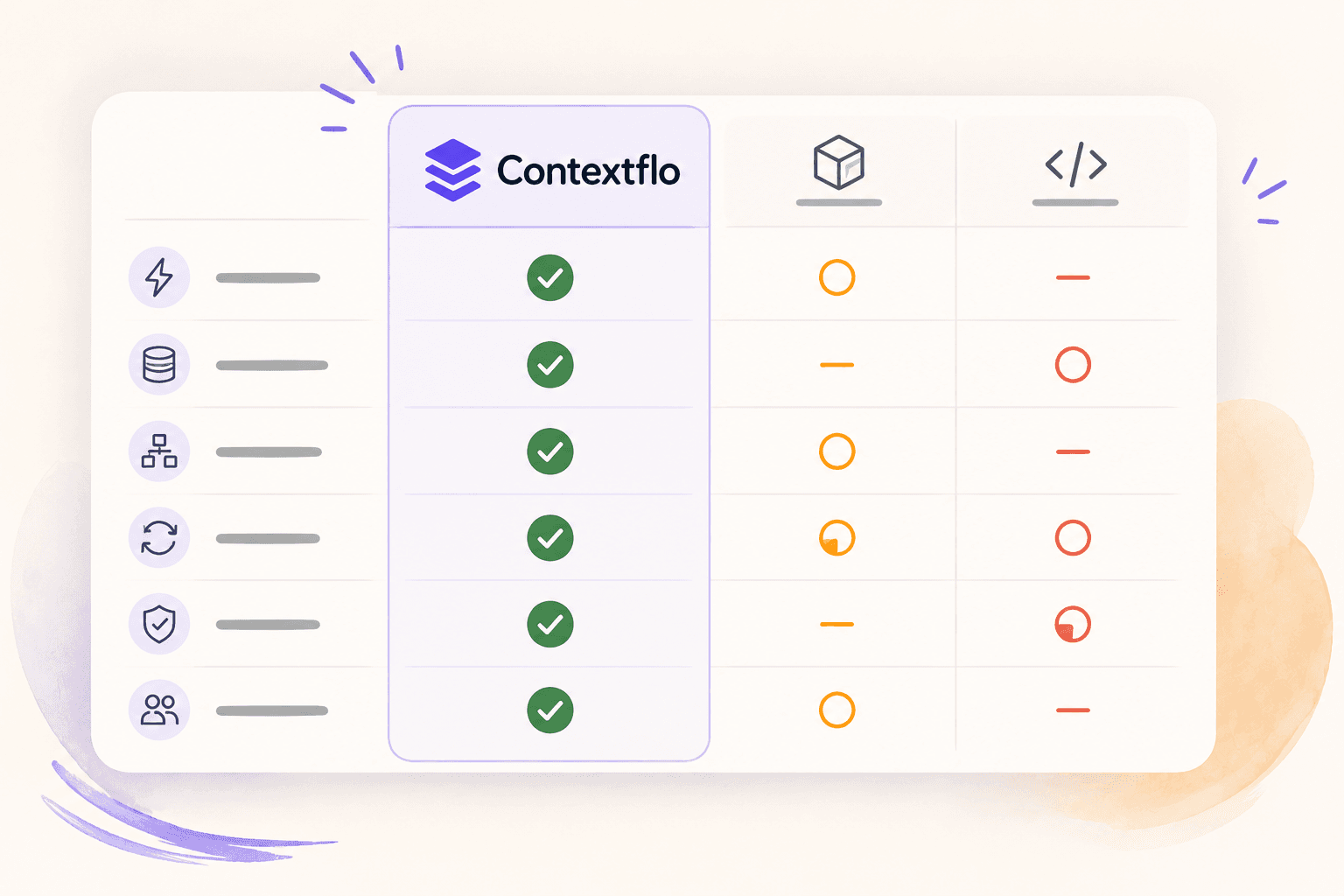
Conversational analytics: 5 ways to set it up, compared
7 min read
Connect Claude to BigQuery: the connector, the errors, a team path
8 min read
Connect Claude to Postgres: MCP Setup Guide
8 min read

How to build a BI dashboard with Claude that your team can actually trust
8 min read

Is it safe to give Claude read-only access to your database?
5 min read
You connected your warehouse to Claude, now what?
5 min read