You Don't Need Another Data Agent. You Already Have One.
Jump to a section
Databricks has Genie. Snowflake has CoWork, the app that used to be called Snowflake Intelligence. Notion published a guide to building a data agent on Snowflake, and Hex has Threads. Each one is a new place to ask data questions, for a team that already asks Claude or ChatGPT everything else.
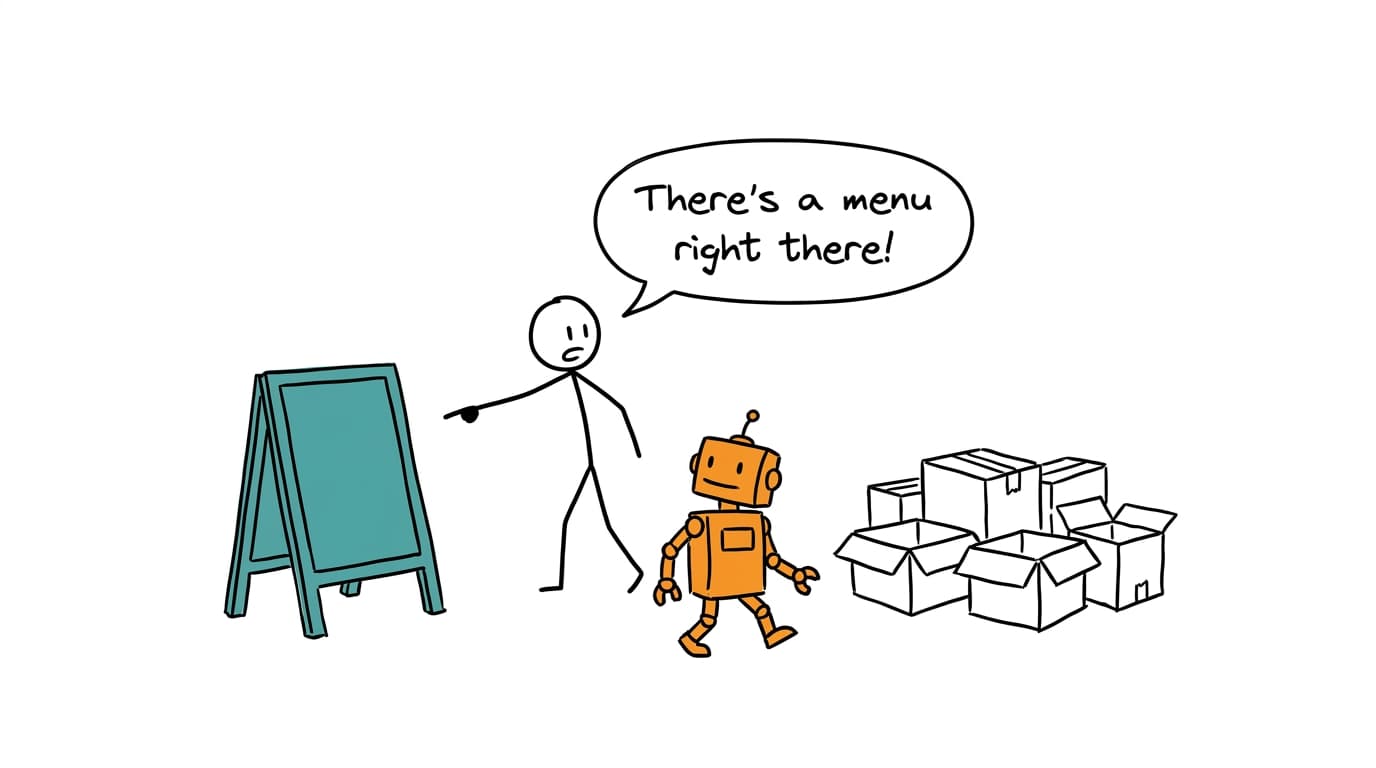
Another chat window doesn't change the answers much. They go wrong because the model doesn't know which table to trust or what a status code means, and most agents fix that by handing you a modeling project. On a small team, the person who knows the business has time to review a draft. They don't have time to write a semantic layer.
Contextflo adds shared context, access controls and query logging to the Claude or ChatGPT your team already uses. I'm comparing it with the others for one kind of company, where the data team is one person or nobody, because that's who we build for.
Every vendor now ships a new tab
At a 40-person company, the "data team" is often one analyst, or a founder who still writes SQL. Every new agent becomes their job. They hand out logins and mirror the warehouse permissions, then type the definition of "active customer" into yet another tool.
Tilt, a live-auction marketplace for limited-edition goods, started with one full-stack data scientist fielding every question. A year after connecting Claude to Snowflake through Contextflo, 30+ people ask for themselves every week, about 6,000 queries a month.
What does a data agent need?
Four things decide whether the answers are any good:
- Access to the data. Ideally all of it, since most companies have more than one source: a warehouse, a production Postgres, a few SaaS tools.
- Context. Which table to trust, what a status code means, which revenue column finance uses. Across 76,000+ AI-generated SQL queries in our logs, 71% of errors were "invalid identifier": the model naming a table or column that doesn't exist. It knew SQL fine and guessed at the schema.
- Per-person access. The support lead shouldn't see payroll just because the agent can.
- A log of what ran. When a number in a deck looks wrong, someone has to find the question and the SQL behind it.
The options, for a data team of 0 or 1
| Product | How it works | Fit for a 0-1 person data team |
|---|---|---|
| Databricks Genie |
| Low: all your data has to be in Databricks first |
| Snowflake CoWork |
| Low: all your data has to be in Snowflake first |
| Notion data agent |
| Low: Snowflake only, key parts in alpha |
| Hex |
| Mid: per-person logins and audit logs need Enterprise |
| Claude + an MCP server |
| High for one person, Low for a team |
| Contextflo |
| High: connects the sources you already have and drafts the context |
When each one is the right pick
If everything already sits in Databricks or Snowflake and someone has time to own the setup, go native. You inherit the platform's permissions and logging.
Databricks Genie
An analyst sets up each space with tables, example SQL and instructions. Each user's Unity Catalog permissions apply, and Genie events land in the audit system table. Usage is free for users until January 31, 2027, with warehouse compute billed as usual.
Snowflake CoWork
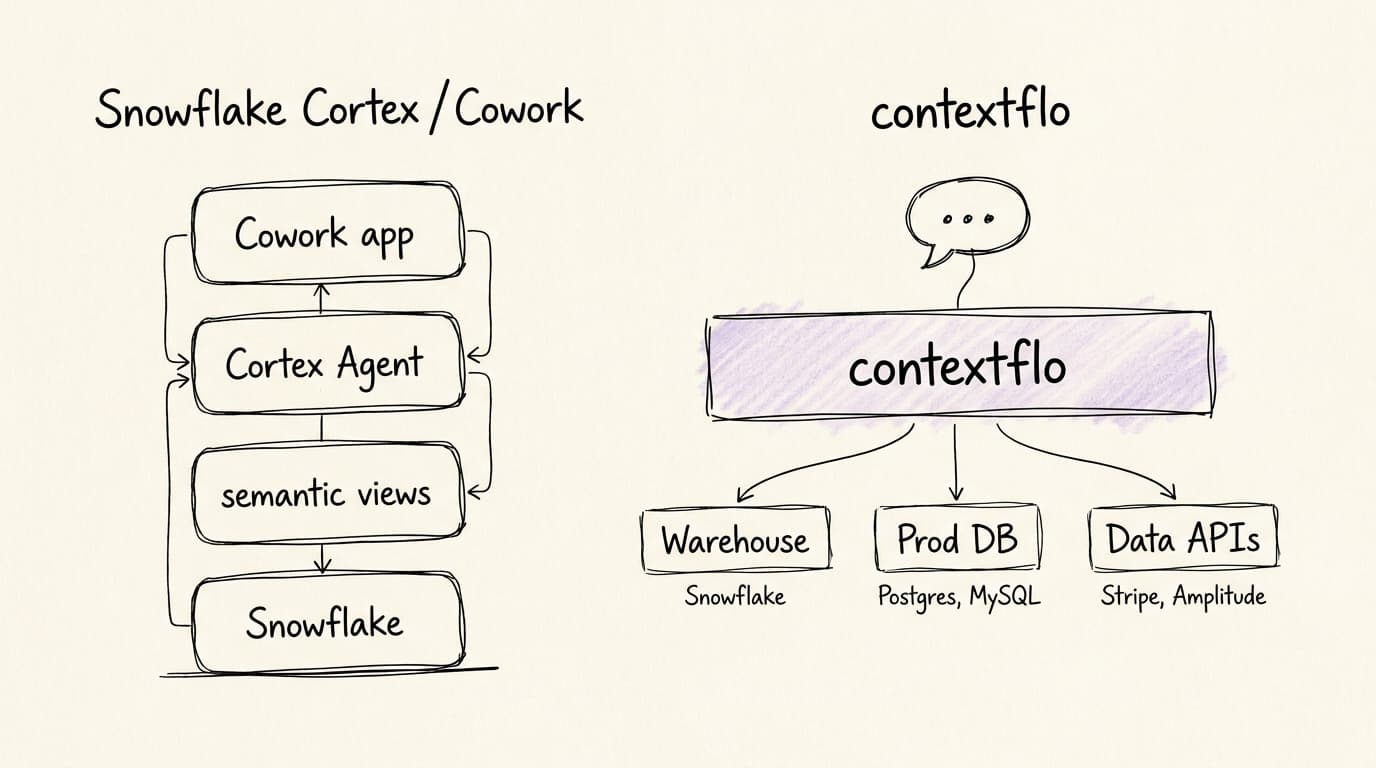
Queries run with the user's own credentials, and their roles and masking policies apply automatically. Structured questions go through semantic views, which Autopilot can draft but someone has to own. We built one end to end in Claude with Snowflake semantic views.
Notion data agent
It puts answers next to the docs your team already reads, through the approved Snowflake MCP server. Workspace-configured MCP connections and per-user authorization in Custom Agents are both labeled alpha, and the audit trail is Snowflake's query history.
Hex
A good home for an analyst who writes SQL and Python. A modeling agent can draft the semantic models. Per-person warehouse logins and audit logs come with Enterprise. More in Hex vs Contextflo.
Claude and an MCP server
Enough for one person on one database, at no extra cost. Use a read-only user and a maintained server (how). It breaks down at the second person, who shares your credential and none of your prompts. Afterward, nobody can tell who ran what.
Where Contextflo fits
Your team keeps asking in Claude or ChatGPT. Contextflo connects it over MCP to whatever you have, whether that's Snowflake, a Postgres replica or an uploaded CSV. It drafts context from your schema and from any source code and docs you point it at. Admins pick which tables each group can query, and every question is logged with its SQL and the person who asked.
The generated context is only a draft, and someone still has to fix what it gets wrong. Access rules are table-level, so "each manager sees only their region's rows" belongs in the warehouse. Access rules and the activity log are on paid plans, not the free tier. And we don't ship a chat app, so your team needs Claude or ChatGPT.
If you're the one person setting this up for a whole company, the Data Lead Guide walks through the rollout end to end.
FAQ
What is a data agent? An AI assistant that answers questions about your company's data by writing and running queries against your warehouse or database. To be useful for a team it also needs context about what your tables mean, rules about who can see which data, and a record of every query it ran.
Can I use Claude or ChatGPT as a data agent? Yes. Both connect to databases and warehouses through MCP servers. A plain MCP server gives you the connection. For a team, you also need shared context, per-person access and a query log, which you either build around the server or get from a layer like Contextflo.
Should a small team pick Databricks Genie or Snowflake CoWork? If all your data is already in Databricks or Snowflake and someone can own the setup, the native agent is a reasonable pick: it uses the platform's own permissions and logging. It only covers that platform's data, and your team asks in a new app instead of the AI tool they already use.