Set up Contextflo from inside Claude: onboarding is now a conversation
Hi, this is Vivek, building Contextflo. I share practical notes on getting answers from your data, a couple of times a month.
One of our users asked if he could manage his Contextflo setup from his Claude Code session, without switching to our web app. So we did that, and then went further: the whole onboarding now happens inside your agent chat.
Why we moved onboarding into the chat
Our old setup was a wizard in the web app: forms for credentials, a table picker, then a separate page for adding descriptions. It worked, but it asked people to leave the place where they actually ask questions, and the most important step (explaining what the data means) came last, when people were already tired of clicking.
Your agent is already where the questions happen. It can ask you what it needs to know, in plain language, at the moment it needs it. So that is where setup lives now.
How to set it up
- Sign up at contextflo.com.
- Connect your agent. The setup screen shows the steps for Claude, ChatGPT, Claude Code and Cursor. It takes a minute.
- Ask your agent to onboard you. Something like "@cf can you onboard me to Contextflo" is enough.
That is the whole list. Everything after this happens in the conversation.
What the agent walks you through
| Step | What happens |
|---|---|
| Where your data lives | The agent asks which warehouse or database you use (BigQuery, Snowflake, Postgres and others) |
| What to have ready | It lists exactly what you need, like a read-only service account and its key for BigQuery |
| Connecting | It sends you to a secure connect form with a step-by-step guide. Credentials go into the form, never into the chat |
| Picking tables | You choose the tables your team actually needs, not the whole warehouse |
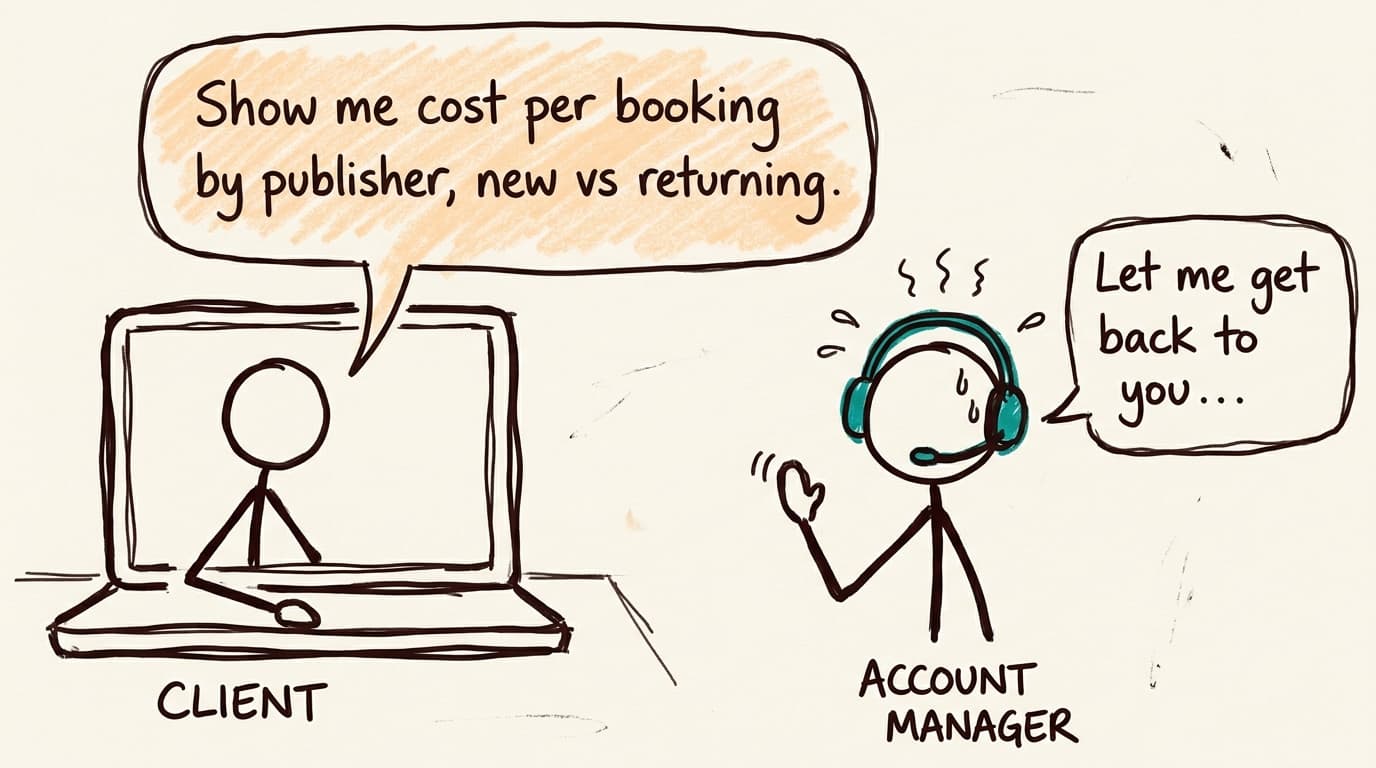
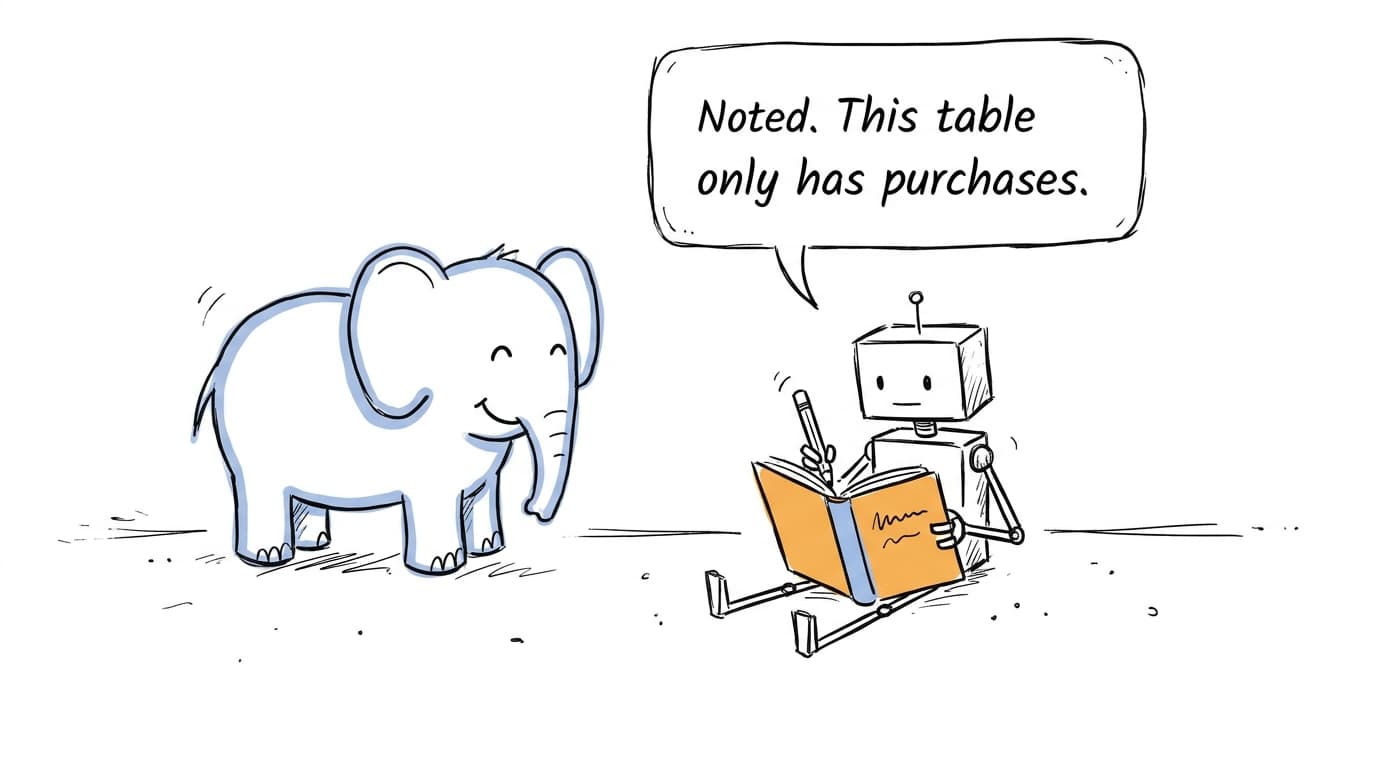
| What your numbers mean | It asks the questions a new analyst would: which table counts a customer, whether revenue includes refunds, what your channel names map to. Your answers become shared definitions |
| A first answer | It runs a real question against your data so you can check the result |
The definitions step is the one that matters most. It is what makes the next person's question come back with the same answer as yours, instead of the agent guessing again.
For admins: keep it current from where you work
The original request was about this. If you are an admin, you can update table descriptions and definitions straight from the chat. Say you just changed some table logic in Claude Code: you can update the context right there, and everyone's next question uses it.
Your agent can also flag anything odd it notices mid-question, like a definition that looks out of date, and send it to your admins.
What is Contextflo?
Contextflo is a governed context layer between your data and the AI your team already uses. Connect your warehouse once, and your team asks questions in their own Claude or ChatGPT. The model writes and runs the SQL; Contextflo supplies the definitions, the per-user access control, and the audit that make the answers trustworthy. Your data never moves, and you do not need a data team.
How it works
Your team queries in their own Claude or ChatGPT over MCP, so you bring any agent rather than a locked-in bot, and every answer comes back with the SQL shown and access enforced per user.
Where it is still rough
Connecting a warehouse still needs someone who can create a read-only service account, and on locked-down cloud accounts that may be an IT request. The agent tells you exactly what to ask for, but it cannot click through your cloud console for you.
We'll set up Contextflo for your team in a week.
We connect your data, define your metrics with you, and get your team asking Claude directly. You pay only once it's working.
Book a 20-minute callSee how teams use Contextflo

Related posts

Keep reading
Conversational analytics: 5 ways to set it up, compared
7 min read
How to connect Claude to BigQuery? What works and what doesn't in 2026
8 min read
How to connect Claude to Postgres without giving it write access
7 min read

How to build a BI dashboard with Claude that your team can actually trust
8 min read
How to give Claude read-only access to your database (it isn't always the default)
7 min read

You connected your warehouse to Claude, now what?
5 min read
Why is the team missing sprint goals? How to analyze Jira data with AI
8 min read
Are my ads actually profitable? How to analyze Facebook and TikTok ads together with AI
7 min read
Still building the weekly KPI report by hand? How to automate it with Claude
7 min read