What is a governed context layer for AI analytics?
Hi, this is Vivek, building Contextflo. I share practical notes on getting answers from your data, a couple of times a month.

A governed context layer for AI analytics is the runtime layer that sits between an AI agent and your data. It gives the agent two things a raw database connection cannot: the context to answer a question correctly, and the governance to answer it safely.
The term shows up more and more as teams point Claude, ChatGPT, and other agents at their warehouses and discover that a connection is necessary but nowhere near sufficient. This page is an attempt to define it plainly, because most of what gets written about it is either too vague to act on or attached to one product.
The short version. Context is everything the agent needs to know to write the right query: what the tables mean and how a metric is defined. Governance is everything that keeps a question inside the boundary a person is allowed to ask: access control applied before the query runs, and a record of who asked what. A governed context layer supplies both, at query time, to whatever agent the team already uses.
Why a database connection is not enough
Give a capable model a warehouse connection and a schema, and it will confidently write SQL. Some of it will be right. A lot of it will be wrong in ways that look right.
Across 76,000+ AI-generated SQL queries in our own logs, 71% of all errors were "invalid identifier": the model referencing a table or column that does not exist. That is not the model being bad at SQL. It is the model guessing at what a database means, because a production schema does not spell it out. Real tables are named usr_acct and ord, there are three revenue-ish columns, and the rule that refunded orders do not count lives in someone's head rather than the schema.
The failures that error out are the lucky ones. When a model guesses a column that happens to exist, it returns a number. Nobody sees an error, and the wrong number goes into a slide. This is the case a context layer is built to prevent, and it is why the problem is worse than a benchmark suggests.
The two halves of the definition
Splitting the term into its two words is the fastest way to understand it.
Context: what the agent needs to know
Context is the data about your data. It has a few distinct parts, and teams tend to supply them in this order:
- Schema semantics. What each table and column actually means. That
stsis a status enum with six values and only two of them mean "completed." That one table is deprecated and the agent should use another. Column names alone do not carry this. - Metric and business definitions. "Revenue" is a decision someone made, not a column the model can find. Same with active user, churn, and take rate. Without a written definition, every conversation re-derives the metric, and two people asking the same question get two different answers.
- Golden or verified queries. The query that answers "monthly recurring revenue by plan" correctly, saved and reused instead of re-guessed. These are the highest-signal context a layer can hold, because they encode both the schema and the business logic in one working example.
The best context is not hand-typed into a document. It is generated from the sources that already describe your data and stay current with it: the live schema, the source code that writes to the warehouse, and the internal docs your team already keeps. A description generated from the schema updates when the schema does. A paragraph typed into a wiki in January is wrong by June and nobody knows.
Governance: what keeps the answer safe
This is the half that gets left out, and it is the half that turns "a neat demo" into "something you can put in front of a whole company."
The instinct is to treat governance as a compliance checkbox. It is closer to the opposite. The real risk with an AI analyst is not that it writes broken SQL. It is that it writes perfectly correct SQL against a table the person asking should never see. A model that faithfully answers "what is the CEO's compensation?" for anyone who asks has done its job and created a problem.
So governance in this context means two concrete things:
- Access control applied at query time, before the warehouse runs anything. The agent should only ever be handed the tables a given user is allowed to query. Not filtered after the fact, and not enforced by a prompt asking the model to behave. The boundary lives in the layer that gives the agent its tools, scoped per user.
- A per-user audit trail. Every question ties back to a person, the SQL that ran, and when. Not because anyone plans to read it daily, but because "who asked this and what did the system actually run" is a question you eventually have to answer, and a shared service account with no attribution cannot answer it.
There is a quieter benefit to scoping access this way. Every table you hide from the agent is a table it cannot get confused by. A model choosing among twelve relevant tables is more accurate than one choosing among two hundred, so access control doubles as context narrowing.
Why "governed" is not optional once a second person shows up
For one developer querying their own database, governance is idle. You can see everything anyway, and the audit trail is a log you will never open.
The moment a second person asks a question, both halves start earning their keep. Definitions have to be shared so the CEO at 9am and the ops lead at 4pm get the same revenue number. Access has to be scoped so the sales hire cannot read HR salaries by asking nicely. And attribution has to exist so a question that returned something sensitive can be traced to who ran it. A context layer without governance answers accurately and leaks; a governance layer without context is safe and useless. The category exists because analytics needs both at the same time.
Bring your own agent
One design choice separates a governed context layer from the older idea of a natural-language BI feature bolted onto a dashboard tool: it does not ship its own chatbot.
The layer serves context and enforces governance for whatever model the team already uses. In practice that means the agent connects over MCP, so the same Claude or ChatGPT a team works in all day can query the warehouse with full context and per-user access control, without anyone learning a new destination or trusting a vendor's in-house bot to be as good as the frontier model they already pay for. When the next stronger model ships, you point it at the same layer. The context and the governance are the durable asset. The model is swappable.
What a good one does, concretely
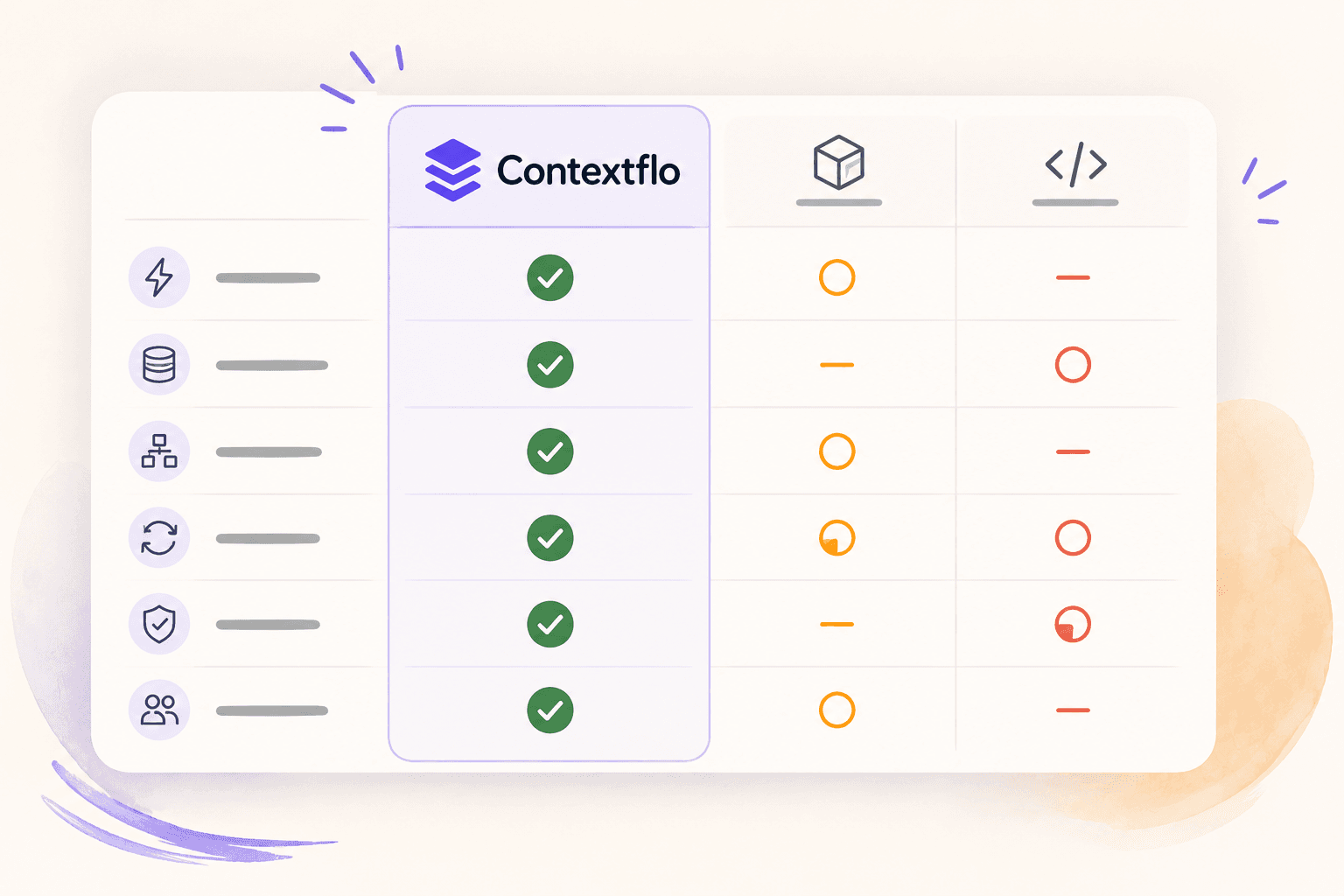
If you are evaluating something that calls itself a context layer, these are the checks that separate a real one from a schema viewer with a chat box.
| Capability | What to look for |
|---|---|
| Context freshness | Schema re-syncs on its own, so definitions do not drift from the tables |
| Definitions | Metrics and business concepts written once, served to every query |
| Verified queries | Known-good SQL saved and reused, not re-guessed each session |
| Access control | Table-level, enforced at query time, before the warehouse runs anything |
| Audit | Every query attributable to a person, with the SQL that ran |
| Agent | Works with the model your team already uses, not a locked-in bot |
Context generated from your schema and code is a first draft, not gospel. It gets structure right and business meaning wrong often enough that someone who knows the data has to read it. Nothing in a schema records that orders before a 2024 migration use a different status vocabulary. What changes is that reviewing a generated draft takes an afternoon and authoring one from an empty file takes weeks.
Where this sits next to the semantic layer
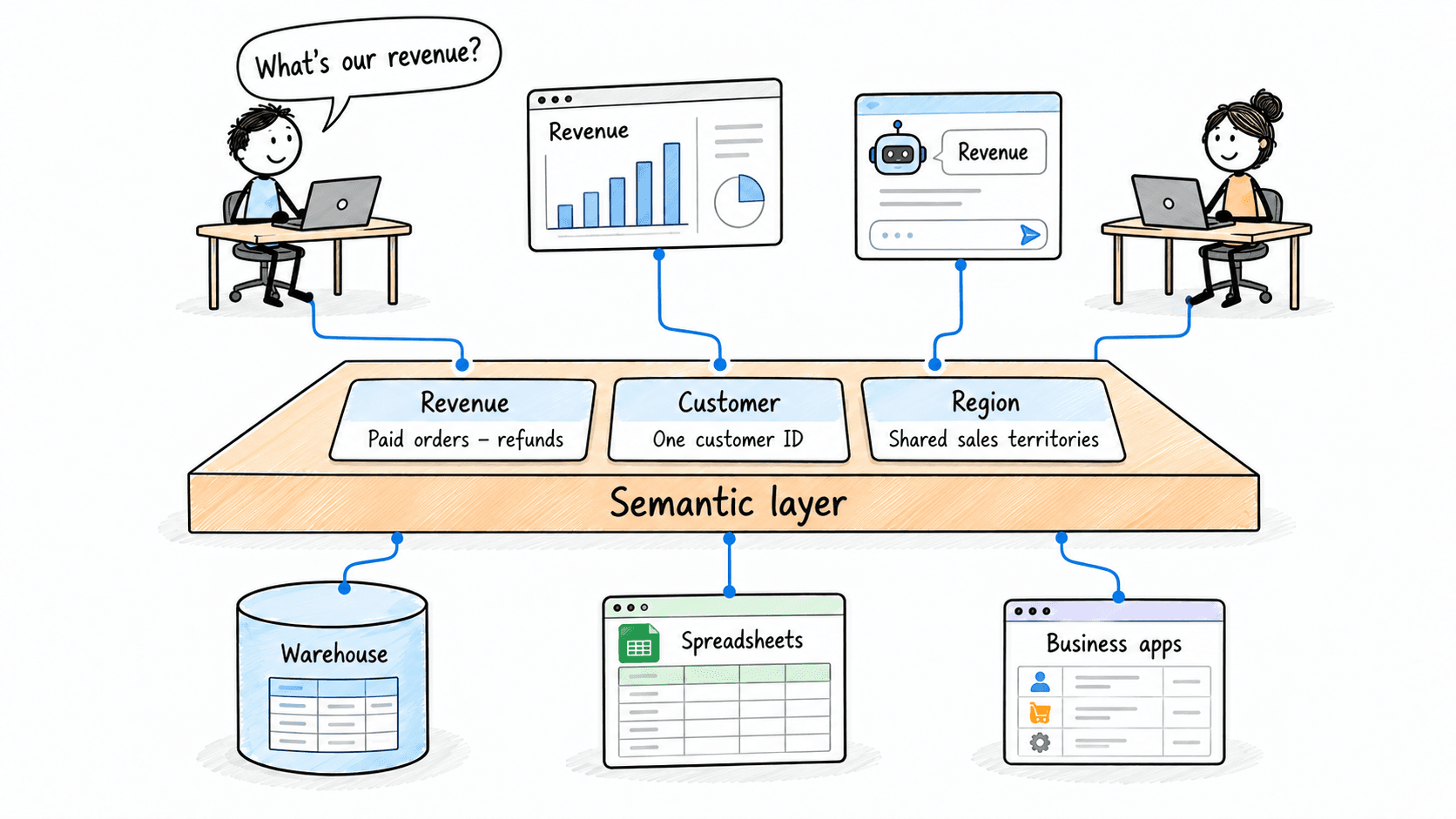
If you have lived through the data-modeling world, this sounds adjacent to a semantic layer, and it is. A traditional semantic layer (LookML, dbt's MetricFlow, Cube) defines metrics and dimensions in config so that everything downstream agrees on what "revenue" means. That is exactly the context half of this.
Two things are different. First, a governed context layer treats access control and audit as part of the layer rather than something the BI tool bolts on afterward, because the consumer is now an autonomous agent rather than a human clicking through a governed dashboard. Second, it leans on generated-and-verified context over hand-authored config, because config that has to be maintained by hand is config that rots, and a stale definition is more dangerous to an agent than to a person who would have noticed the number looked off.
One implementation
Contextflo is a governed context layer for AI analytics. It connects to your warehouse and to your context sources, generates schema descriptions and metric definitions you review, holds your saved queries, scopes every query per user through table-level access controls, logs who asked what, and serves all of it to whatever agent your team uses over MCP.
To make it concrete: Tilt, a live-auction marketplace for limited-edition goods, runs around 6,000 AI-driven queries a month across a mostly non-technical team, with one person owning the data. That volume is only safe because access is scoped per user and every query is attributable, and it is only useful because the definitions and saved queries are shared. That is the two-halves argument in one customer.
It is free for one user and one data source if you want to see the shape of it before deciding whether the category matters to your team.
Here is Contextflo in action.
Find out if Contextflo is the right fit for you.
See how teams use Contextflo
Related posts


Keep reading
Conversational analytics: 5 ways to set it up, compared
7 min read
How to connect Claude to BigQuery (and fix the errors you'll hit)
8 min read
How to connect Claude to Postgres (and keep it read-only)
7 min read
How to build a BI dashboard with Claude that your team can actually trust
8 min read
How to give Claude read-only access to your database (it isn't always the default)
7 min read
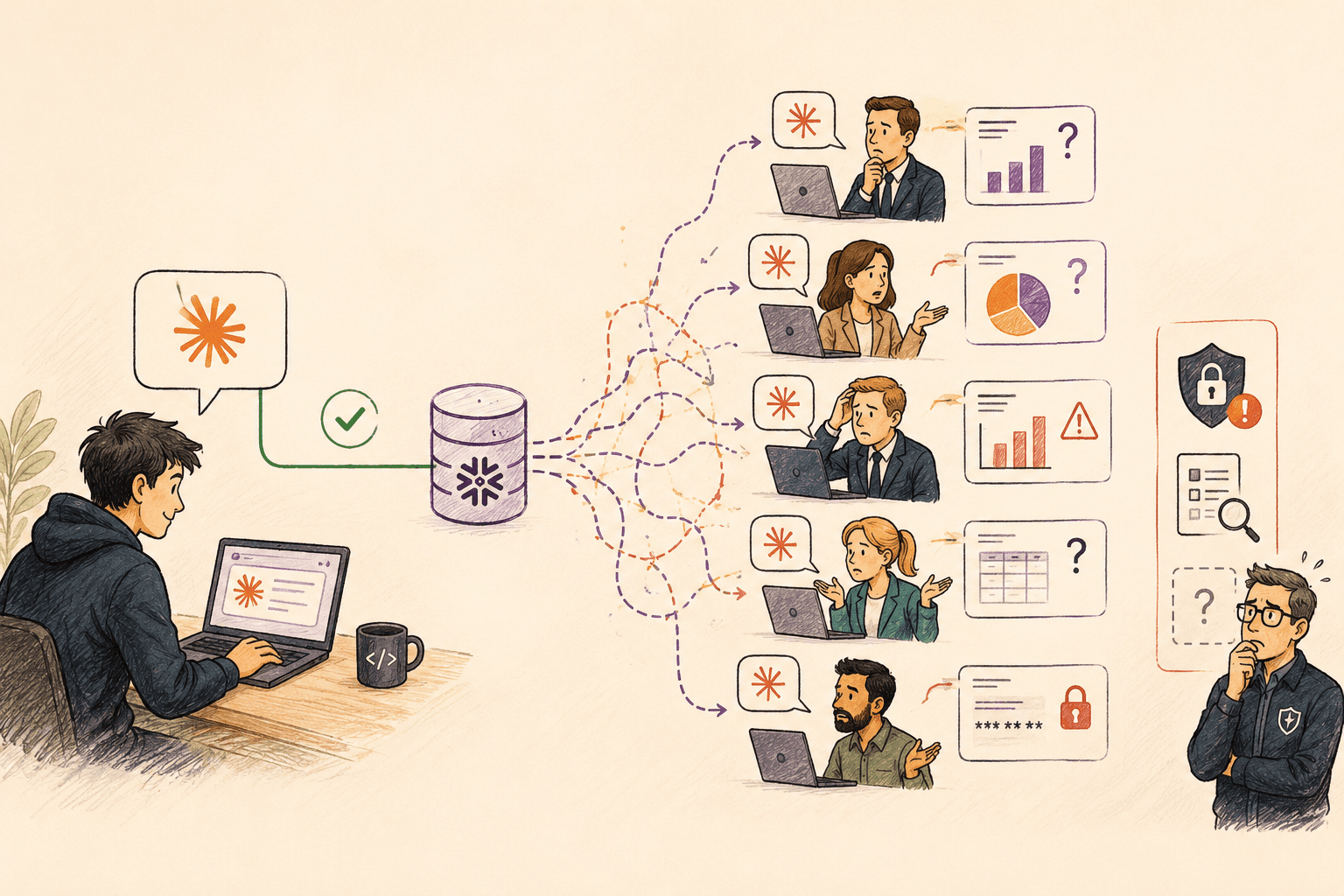
You connected your warehouse to Claude, now what?
5 min read
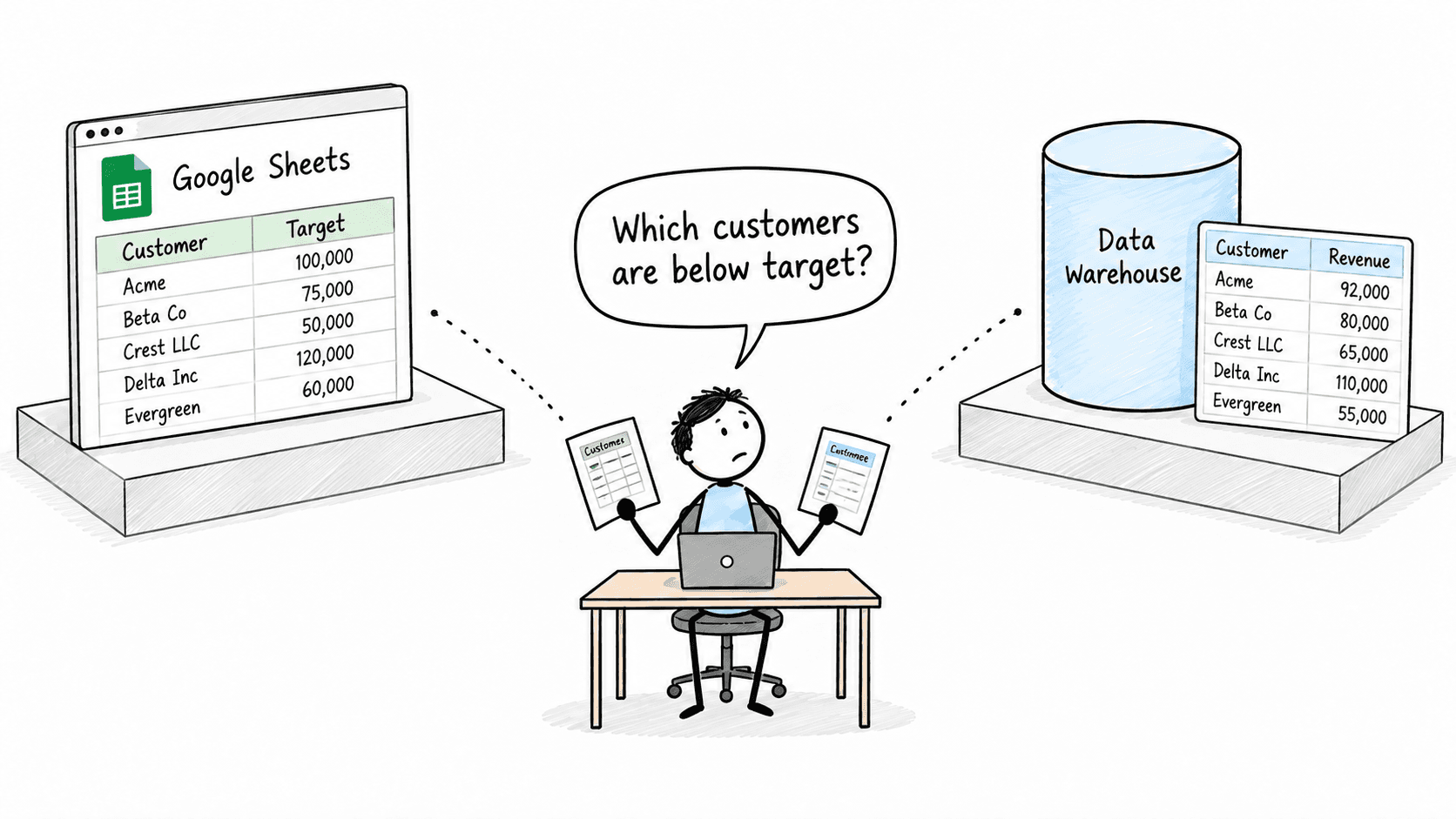
How to connect Google Sheets to Claude, and ask it alongside your warehouse
4 min read
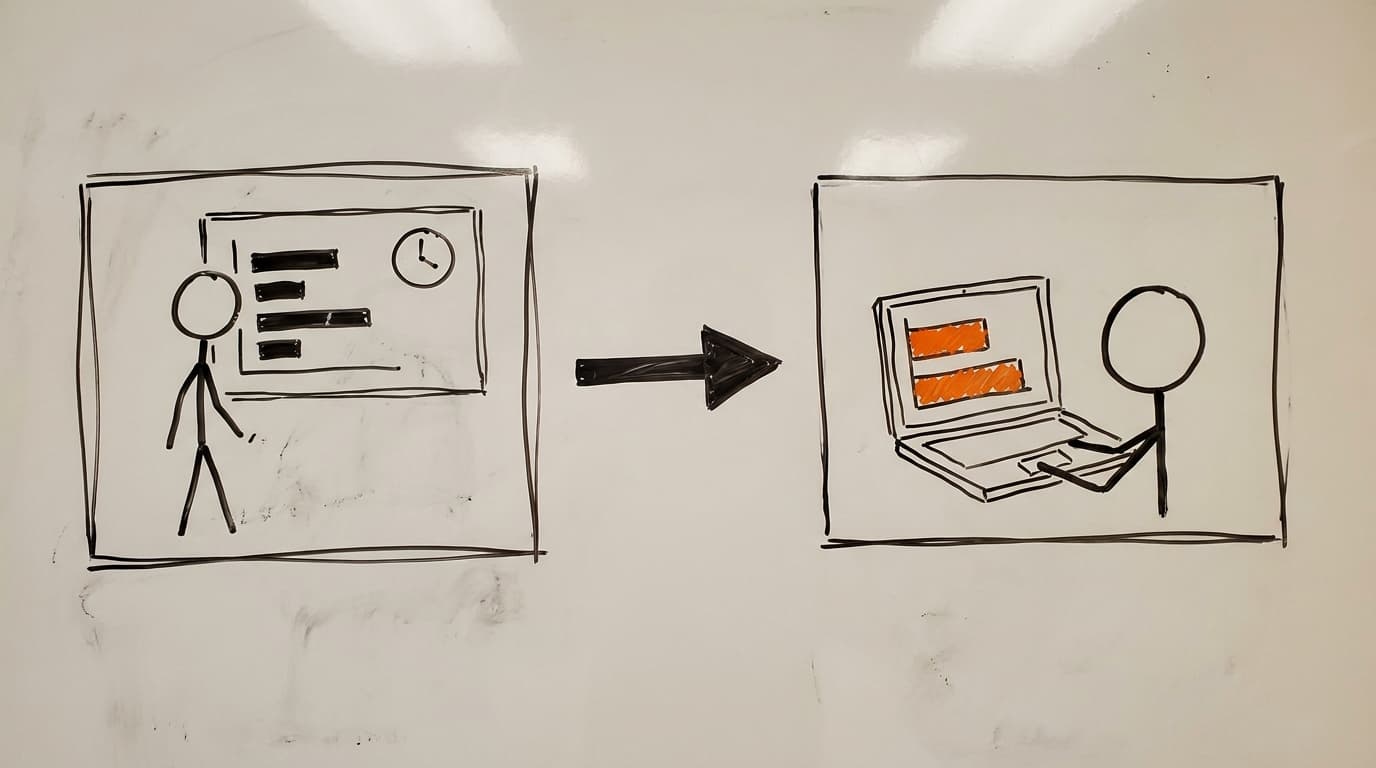
A travel company's revenue team stopped opening Power BI every morning
3 min read
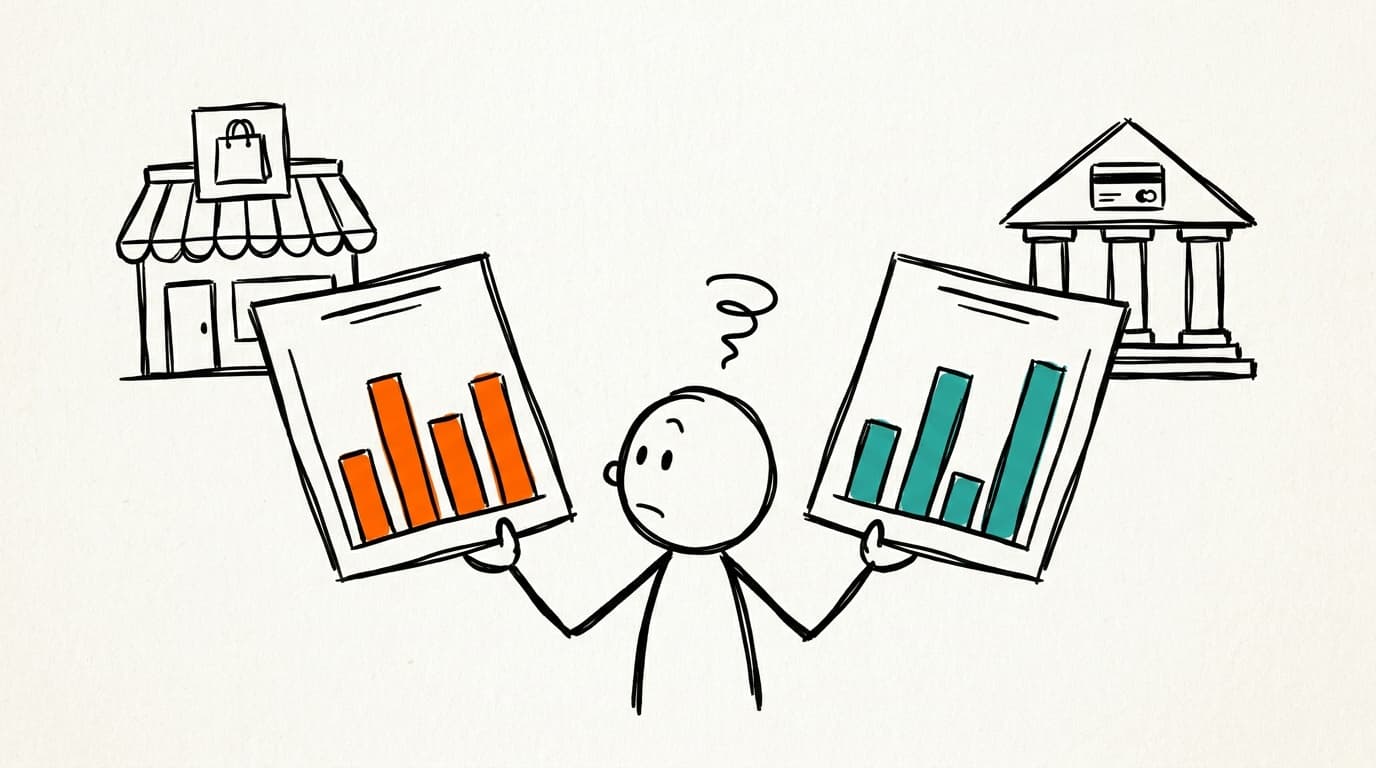
How finance and ops teams catch the numbers that don't match, before a customer does
4 min read